Industry Overview
The global band saw blade market was valued at approximately USD 1.16 billion in 2022 and is projected to reach USD 1.35 billion by 2028, growing at a CAGR of 2.5%. Within this broader market, the meat and food processing segment represents one of the fastest-growing application areas, driven by rising global demand for processed meat, frozen products, and ready-to-cut portions.
Several factors are accelerating demand for high-performance meat band saw blades:
- Automation in food processing: As meat processing plants adopt automated cutting lines, blade consistency and durability become critical for uninterrupted production.
- Food safety and hygiene requirements: Stricter international standards are pushing processors toward blades made from food-grade materials that resist corrosion and prevent contamination.
- Growth in frozen and bone-in product processing: The increasing popularity of frozen meat and bone-in cuts places higher stress on blades, creating demand for more durable, wear-resistant solutions.
- Customisation needs: Processors increasingly require blades tailored to their specific product types, production scales, and machine configurations.
For B2B buyers and procurement managers, understanding what drives blade life and cutting performance is essential to reducing downtime, minimising waste, and controlling total cost of ownership.
Common Problems: Why Meat Band Saw Blades Fail Prematurely
In real-world meat processing environments, blade failure rarely happens because of a single cause. The vast majority of premature blade failures stem from a combination of blade selection errors and machine-related issues.
Crooked or Wandering Cuts
One of the most frequent complaints in butcher shops and processing rooms is crooked cutting. A blade that consistently pulls to one side or struggles to track straight may be caused by:
- Worn upper or lower guides
- Incorrect blade tension
- Wheel misalignment
- Uneven tooth set
- Incorrect blade width or TPI for the application
- A dull blade that no longer bites cleanly
In many cases, operators assume the blade itself is defective, when the real issue lies in machine setup. Worn guide inserts and poor tracking allow the blade to move excessively during cutting, causing wandering cuts and increased product waste.
Premature Breakage and Cracking
Premature blade breakage is usually caused by stress, fatigue, overheating, or contact with machine components. Common contributing factors include:
- Excessive blade tension — overstressing the blade body
- Blade rubbing against wheel flanges or worn guides
- Poor wheel alignment — causing uneven load distribution
- Overheating — often from inadequate coolant or excessive feed pressure
- Incorrect blade thickness for the machine — thin-wheel machines are especially sensitive; thicker blades fatigue faster when repeatedly flexed around small wheel diameters
- Aggressive cutting of frozen or bone-in product — which increases impact stress on the tooth edge
Cracks often begin in the tooth gullet area before spreading into the blade body. Once cracking begins, failure can happen rapidly. If blades repeatedly break in the same area, the machine should be inspected for contact points or alignment issues.
Rapid Dulling of Teeth
Teeth that dull earlier than expected typically point to incorrect cutting parameters or blade selection-:
- Cutting speed or feed rate too high or too low for the material being cut
- Wrong tooth pitch — coarse teeth on thin or soft material, or fine teeth on dense frozen product
- Improper break-in procedure — a critical step often overlooked
- Inadequate coolant flow or concentration — leading to heat buildup and accelerated wear
- Material work-hardening — particularly relevant with certain frozen products
Drifting and Binding During the Cut
Once a blade wears past its peak, it can begin to shift mid-cut, veering sideways or flexing under pressure. Binding occurs when the blade stalls or sticks partway through the material — a sign that the cutting edge no longer bites cleanly or blade tension has failed. Both conditions increase heat, pressure, and friction in the machine, and a blade that binds even once should be replaced as a priority.
Key Insight for Procurement Teams
Most meat bandsaw blade failures are not caused by the blade alone. Blade tension, wheel alignment, worn guides, incorrect tooth pitch, machine tracking, and poor maintenance all reduce blade life and affect cut quality. Replacing a blade without addressing the underlying machine issue simply results in another premature failure.
Recommended Products
Choosing the right blade for your specific application is the foundation of efficient cutting. Below is an overview of the primary meat band saw blade types available for different processing needs.
High Carbon Steel Blades
The most widely used category for general meat cutting. High carbon steel blades offer good hardness and toughness for cutting meat, poultry, and bone. They are cost-effective but have lower corrosion resistance and require regular maintenance. Common material grades include C67S, C75S, C75Cr1, SK5, and 51CrV4.
Best for: General butchery, fresh meat, poultry, cost-sensitive operations.
Stainless Steel Blades
Stainless steel band saw blades provide excellent corrosion and oxidation resistance, making them ideal for seafood processing and operations with strict hygiene requirements. Common grades include AISI 420 and DIN 1.4116. Stainless blades are rust-proof and meet food safety standards for direct food contact.
Best for: Fish and seafood, high-humidity environments, operations requiring frequent washdowns.
Frozen Meat and Bone Cutting Blades
These blades are engineered with specialised tooth geometries and hardened teeth to handle the extreme demands of frozen product and bone-in cuts. They typically feature larger gullets for efficient waste clearance and reduced heat buildup during aggressive cutting.
Best for: Frozen blocks, bone-in beef and pork, high-throughput production environments.
Bi-Metal Blades
Bi-metal blades combine a high-speed steel tooth edge with a flexible alloy steel backing, offering superior durability compared to conventional blades. They are particularly effective for frozen applications, with some variants capable of cutting at temperatures as low as -60°C.
Best for: Frozen seafood, high-volume frozen meat processing, demanding continuous operations.
Selection Factors: Choosing the Right Blade for Your Application
Selecting the optimal meat band saw blade requires matching several key parameters to your specific cutting conditions.
Tooth Pitch (TPI)
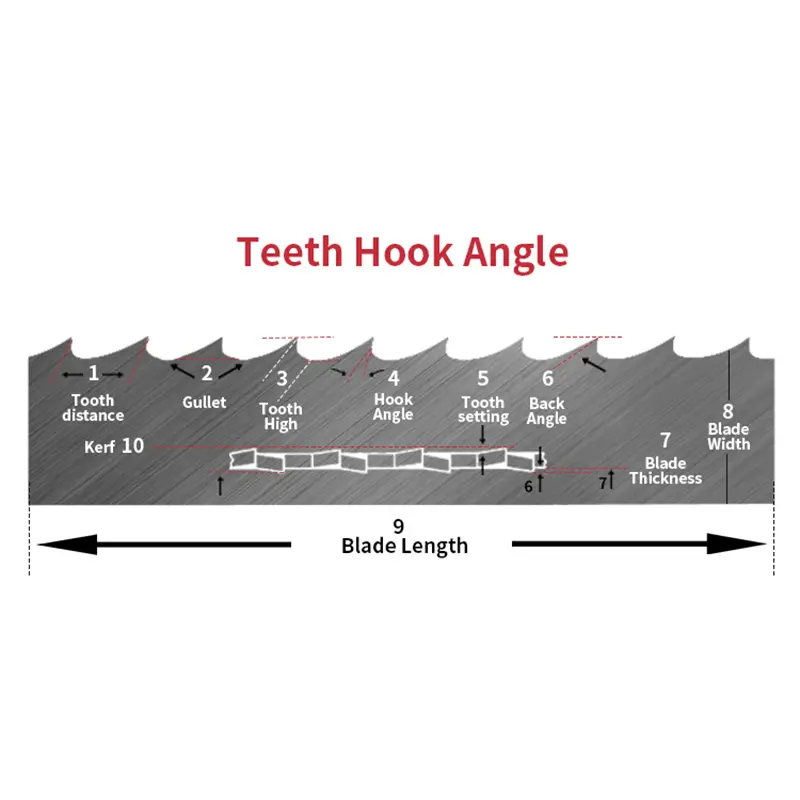
Tooth pitch — measured in teeth per inch (TPI) — is one of the most critical selection factors. The two most common configurations for meat cutting are 3 TPI and 4 TPI:
3 TPI (Coarse Pitch) is ideal for large, frozen, or bone-heavy cuts. The larger gullets clear bone dust and fat more efficiently, reduce heat buildup during continuous cutting, and provide greater durability at higher feed rates. 3 TPI blades are commonly preferred in supermarkets, commercial butcheries, and high-volume processing plants.
4 TPI (Finer Pitch) works best for fresh or chilled meat, smaller cuts, poultry, and applications where surface appearance matters. More teeth in contact with the product produce a smoother cut finish and improved control on thinner sections. However, 4 TPI blades are less forgiving in heavy bone or frozen applications.
Simple rule of thumb: If the meat you are cutting is big, frozen, or bone-heavy → 3 TPI. If it is smaller, fresh, or appearance-critical → 4 TPI.
| Application | Recommended TPI | Key Reason |
|---|---|---|
| Frozen meat blocks | 3 TPI | Larger gullets clear waste, reduce heat |
| Bone-in beef/pork | 3 TPI | Greater durability under impact |
| Fresh boneless meat | 4 TPI | Smoother finish, better control |
| Poultry | 4 TPI | Cleaner cuts on soft tissue |
| Fish/seafood | 4 TPI or finer | Reduced waste, delicate handling |
Cutting Speed
Blade speed must be matched to the product type. Frozen meat generally requires lower speeds (50–80 m/min) to reduce friction heat, while fresh boneless muscle can be cut at 120–170 m/min for faster throughput. Fish processing benefits from higher speeds (150–200 m/min) with fine TPI for a near-fillet finish.
Blade Dimensions (Width and Thickness)
Blade width affects cutting stability and the ability to cut straight lines. Common widths include 12 mm (flexible, good for curved cuts and trimming), 16 mm (the most popular width for general butchery), and 19–20 mm (maximum stability for heavy-duty cutting).
Blade thickness is closely linked to machine wheel diameter. Small benchtop meat saws typically require thinner blades (e.g., 0.020″) because thicker blades fatigue faster on small wheel diameters. Compact machines using thicker blades will experience premature cracking.
Product Temperature
Product temperature plays a major role in blade performance. Frozen meat is harder, more abrasive, and creates more vibration and impact stress on the tooth edge compared to fresh product. A 3 TPI blade will almost always be the best choice for frozen meat, while 4 TPI works well with fresh or chilled meats when bone content is light. Many processors who try 4 TPI on frozen product end up switching back to 3 TPI due to slower cutting speeds and increased tooth wear.
Machine Compatibility
Blade length is machine-specific and must match the manufacturer’s specification. Additionally, machine condition directly affects blade performance — worn guides, improper tension, and misaligned wheels will shorten blade life regardless of blade quality.
Quality Requirements
For B2B buyers sourcing meat band saw blades, quality verification is non-negotiable. Key quality criteria include:
Food Safety Certifications
Premium meat band saw blades should carry relevant food safety certifications. The most recognised include:
- USDA Approval: Certified by the United States Department of Agriculture for use in meat and poultry processing
- NSF/ANSI/3-A Certification: Signifies that blades meet hygiene requirements for the design of meat and poultry processing equipment
- NSF Certification: Ensures knives and blades are safe for use in food processing plants, with materials meeting strict food safety standards
Material and Hardness Specifications
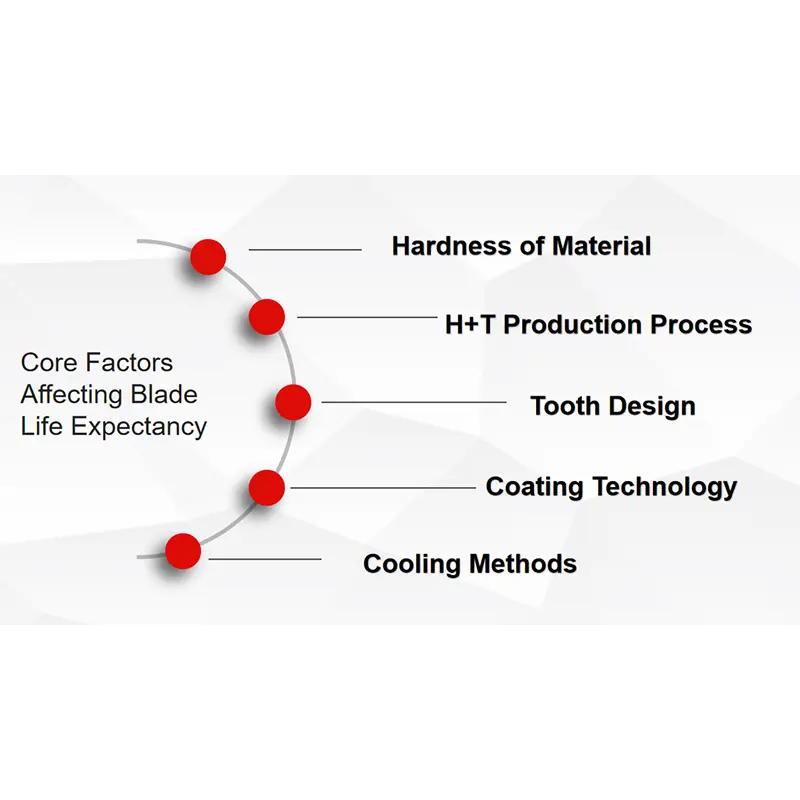
Tooth hardness directly impacts wear resistance and blade life. High-performance blades typically feature:
- Blade body hardness: 44–48 HRC for food-grade band steel
- Tooth hardness: 58–64 HRC for maximum wear resistance
- Premium products: Some advanced blades achieve tooth hardness of 62 HRC with variable tooth height and narrow kerf for higher productivity
Welding Quality
Every band saw blade loop must be joined through a reliable welding process. High-quality manufacturers use computer-controlled flash-butt welding followed by localised induction annealing to ensure smooth joints and strong connectivity, preventing blade fracture during long-hour continuous work-. Seamless welding technology is critical — a weak weld seam is a common failure point in inferior blades.
Surface Finish and Hygiene
Blades designed for food processing should have a continuous, smooth surface without gaps or crevices that could trap residue. Polished high carbon steel and stainless steel surfaces resist corrosion and contamination, making them easier to clean and safer for food contact.
Traceability
Leading manufacturers laser-etch unique tracking numbers onto each blade, providing guaranteed origin identification and traceability. This is increasingly important for food safety audits and quality assurance programmes.