Industry Overview
The global poultry processing market was valued at approximately USD 365 billion in 2025 and is projected to reach USD 494 billion by 2032, growing at a CAGR of 4.40%-1. This sustained growth is driven by rising consumer demand for protein-rich diets, the expansion of processing facilities in emerging markets, and an accelerating shift toward automation and food safety excellence.
Within this vast industry, the band saw blade occupies a deceptively critical position. It is the primary cutting tool in poultry processing plants, butcheries, and food service operations worldwide. From splitting whole carcasses into primal cuts to portioning bone-in products, the performance of a band saw blade directly determines yield rates, product presentation quality, and operational efficiency. As processing volumes increase and hygiene regulations tighten across global markets, selecting the right blade for each poultry application has become a strategic decision — not merely a consumable purchase.
Common Problems
Poultry processors consistently encounter several recurring blade-related issues that disrupt production and inflate operating costs. The most frequent symptoms of incorrect blade selection or poor blade management include:
Crooked or uneven cuts. When a blade drifts during cutting, product dimensions become inconsistent, leading to rejected batches and wasted raw material. This is often caused by incorrect tooth pitch, excessive tension, or worn blade guides.
Excessive product waste. A blade that shreds rather than slices poultry flesh generates meat foam and bone dust, reducing yield per carcass. For processors handling thousands of birds per shift, even a 1–2% yield loss translates into significant annual revenue impact.
Premature blade dulling and breakage. Poultry bones and connective tissue are abrasive. Inferior blades dull quickly, producing excess heat and uneven cuts while placing strain on the saw motor. In high-volume environments, blade snapping mid-shift creates costly production bottlenecks and poses worker safety risks.
Difficulty feeding product. When operators must exert excessive effort to push product through the blade, it signals that the tooth geometry or blade thickness is mismatched to the application. This slows throughput and increases fatigue-related errors.
Many of these problems stem not from the blade alone but from a combination of incorrect blade choice, improper tension, worn guides, and machine tracking issues-. The starting point for resolution is always matching the blade specification to the specific poultry processing task.
Recommended Products
Different poultry processing applications demand different blade configurations. The following recommendations are organized by the primary cutting scenario.
For Fresh Poultry — Precision Cutting and Portioning
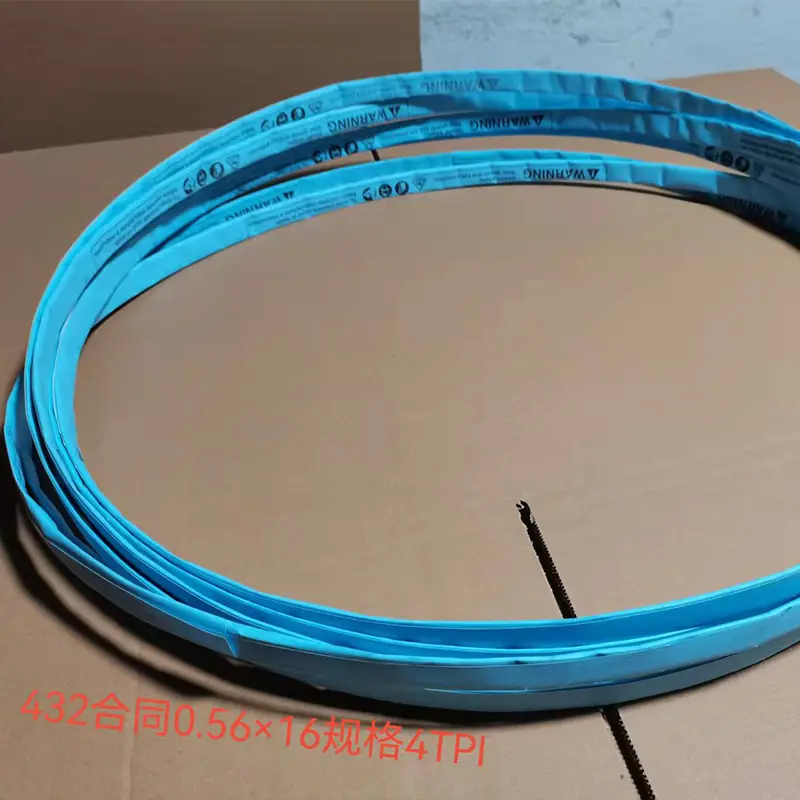
Fresh poultry, including deboned breast meat, thigh cuts, and portion-controlled products, requires a fine-tooth blade that produces smooth, clean cuts without shredding delicate muscle fibers. A 4 TPI blade is the standard recommendation for fresh poultry applications, offering improved control on thinner sections and reduced tearing of soft tissue.
Starrett MeatKutter™ Premium blades are engineered for this purpose, featuring polished high carbon steel with hardened ground teeth and a hardened back. They deliver fast, smooth, clean cuts suitable for poultry, fresh meat, and fish-21. Available in widths from 13 mm to 19 mm with 3–4 TPI options, these blades are compatible with butcheries, food industry operations, abattoirs, and supermarkets.
For Frozen Poultry and Bone-Heavy Cuts
Frozen poultry products and bone-in cuts — including whole frozen birds, leg quarters, and backs — require a coarser tooth design with stronger feed performance and greater durability-11. A 3 TPI blade is almost always the best choice for frozen product, as larger gullets clear bone dust and fat more efficiently while reducing heat buildup during aggressive cutting.
Wintersteiger LSB Prime Food band saw blades are specifically developed for professional meat and poultry processing, featuring food-grade band steel at 44–46 HRC for maximum wear resistance and significantly longer service life compared to standard blades-26. Available in widths of 16–25 mm and thicknesses of 0.50–0.65 mm, they maintain consistently high performance even under intense, continuous use.
For Mixed-Line Operations
Processing facilities that handle both fresh and frozen poultry products benefit from maintaining an inventory of both 3 TPI and 4 TPI blades in common widths (13 mm and 16 mm). The simple rule of thumb: if the product is frozen or bone-heavy, use 3 TPI; if it is fresh, boneless, or appearance-critical, use 4 TPI.
For operations requiring maximum hygiene compliance, Starrett MeatKutter™ Stainless blades feature stainless steel AISI 420 with ground teeth. The stainless construction is rust-proof, meeting strict cleanliness and sanitation requirements — an important consideration for poultry processors subject to frequent washdowns and microbial testing.
Selection Factors
Choosing the optimal band saw blade for poultry processing involves evaluating five interconnected factors.
- Tooth Pitch (TPI). TPI is the single biggest factor in how a blade performs on different products. A coarse pitch (3 TPI) removes material quickly and is effective for frozen blocks and bone-in cuts, while a fine pitch (4 TPI or higher) produces a smoother finish for precision butchery and presentation-critical work.
- Blade Width and Thickness. Wider blades (16–19 mm) deliver straighter cuts on large joints and carcasses, making them ideal for splitting and primary breakdown. Narrower blades (13 mm) offer greater flexibility for intricate or curved cutting. Thicker blades resist twisting under heavy loads, which is essential when processing frozen poultry, while thinner blades handle finer, more delicate cuts without tearing the meat.
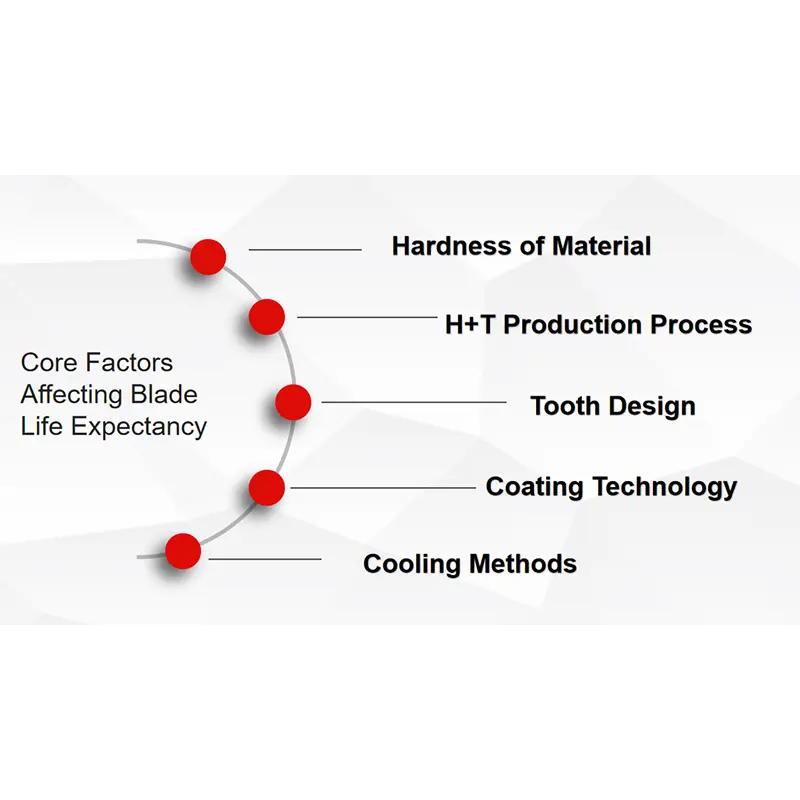
- Blade Material and Hardness. Food-grade high carbon steel remains the industry standard for general poultry cutting. Stainless steel variants provide superior corrosion resistance for environments with high moisture and strict sanitation protocols. Hardness ratings of 44–46 HRC represent the sweet spot for poultry applications, balancing wear resistance with sufficient flexibility to resist cracking on smaller wheel diameters.
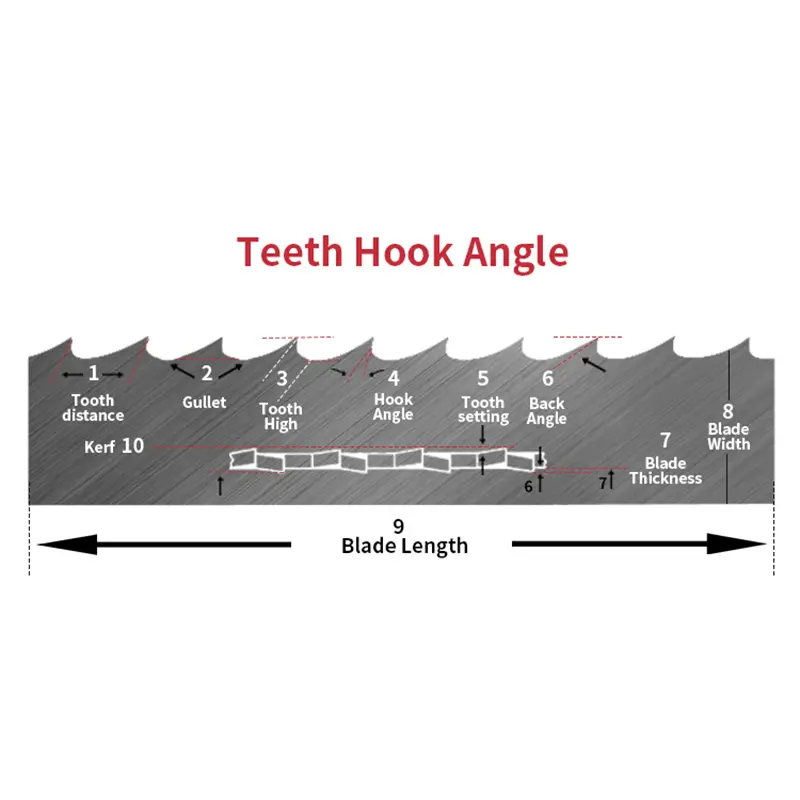
- Tooth Geometry. Tooth shape, set pattern, and gullet depth collectively determine cutting efficiency and waste evacuation. Hook tooth designs are commonly used for poultry and frozen products, offering aggressive cutting action with effective chip clearance.
- Machine Compatibility. Blade length, width, and thickness must match the specific band saw model. Using a blade outside manufacturer specifications causes poor cutting performance or equipment damage 29. For operators with multiple machine brands, custom-welded blades offer a practical solution simply provide the required length and the supplier can weld to fit.
Quality Requirements
Poultry processing band saw blades must satisfy rigorous food safety and hygiene standards that vary by market.
USDA Approval. In the United States, blades used in federally inspected poultry processing facilities must be USDA approved. Starrett’s MeatKutter™ product range — including Premium, Frozen, and Stainless variants — holds this certification.
NSF/ANSI/3-A Certification. This certification signifies that saw blades meet the hygiene requirements for the design of meat and poultry processing equipment. It addresses cleanability, material compatibility, and resistance to bacterial harborage — critical factors in facilities producing ready-to-cook and ready-to-eat poultry products.
Material Traceability. Reputable manufacturers laser-etch unique tracking numbers onto each blade, guaranteeing origin identification and traceability. This capability is increasingly demanded by poultry processors exporting to markets with strict supply chain documentation requirements.
Manufacturing Contaminant Control. The oils and lubricants used during blade manufacturing must be carefully selected to avoid leaving harmful residues. Mineral-based oils free from contaminants are the industry benchmark, ensuring blades remain clean and safe for direct food contact.