Why Is TPI the First Variable in Meat Band Saw Blade Selection?
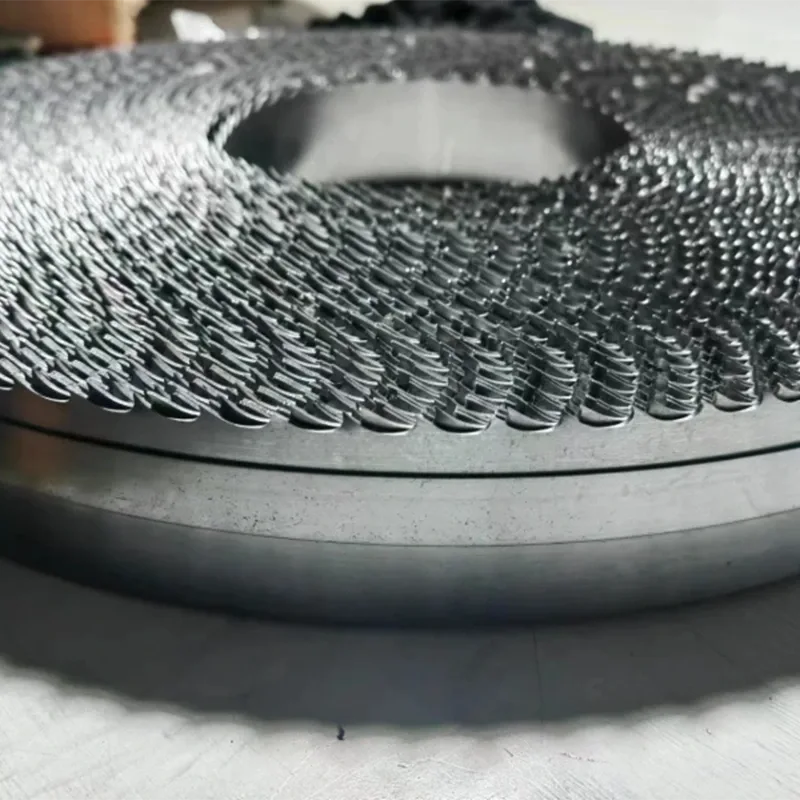
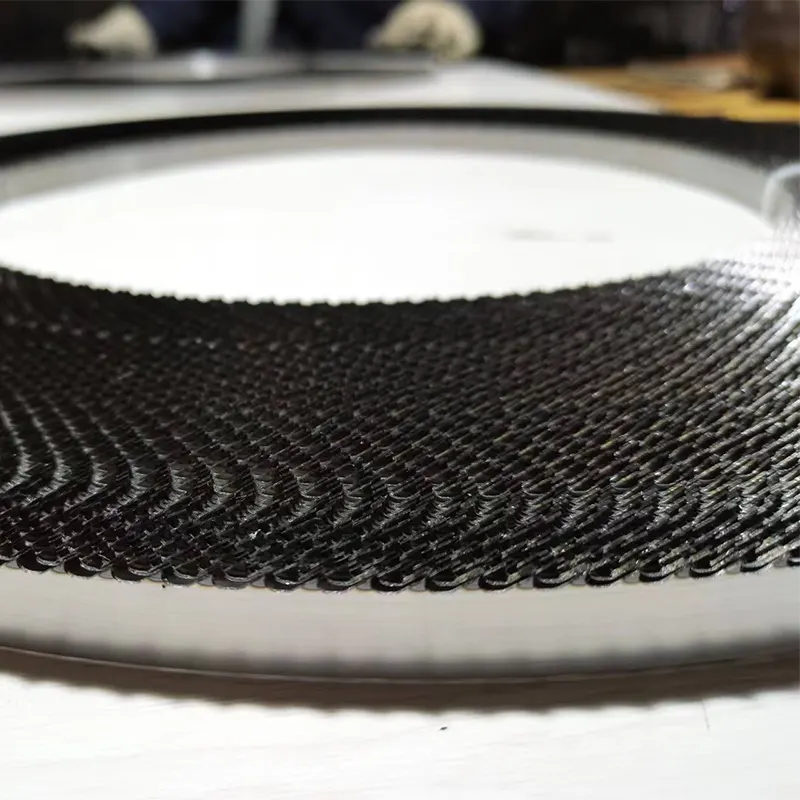
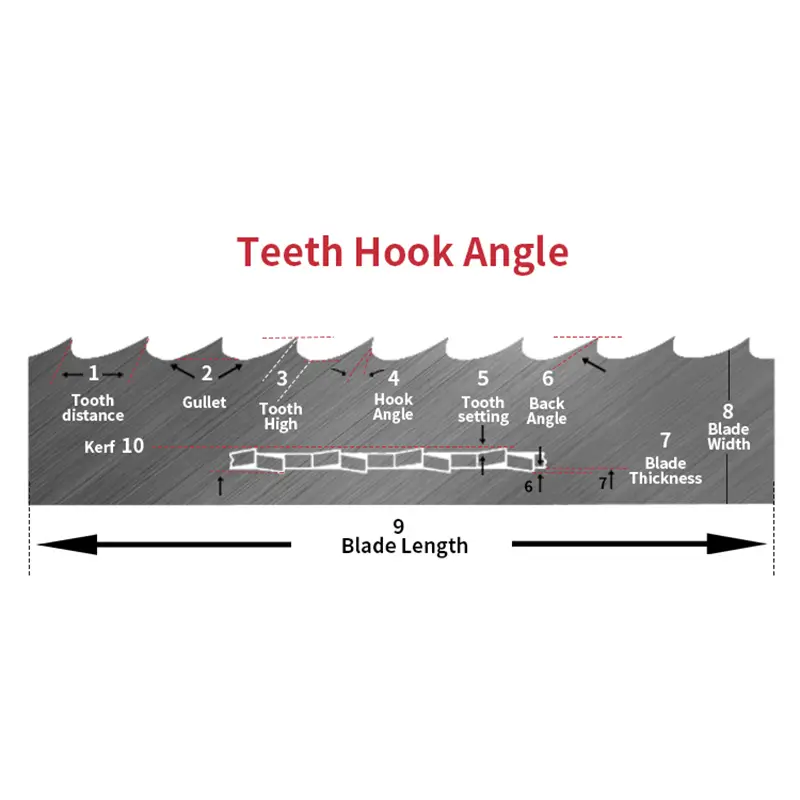
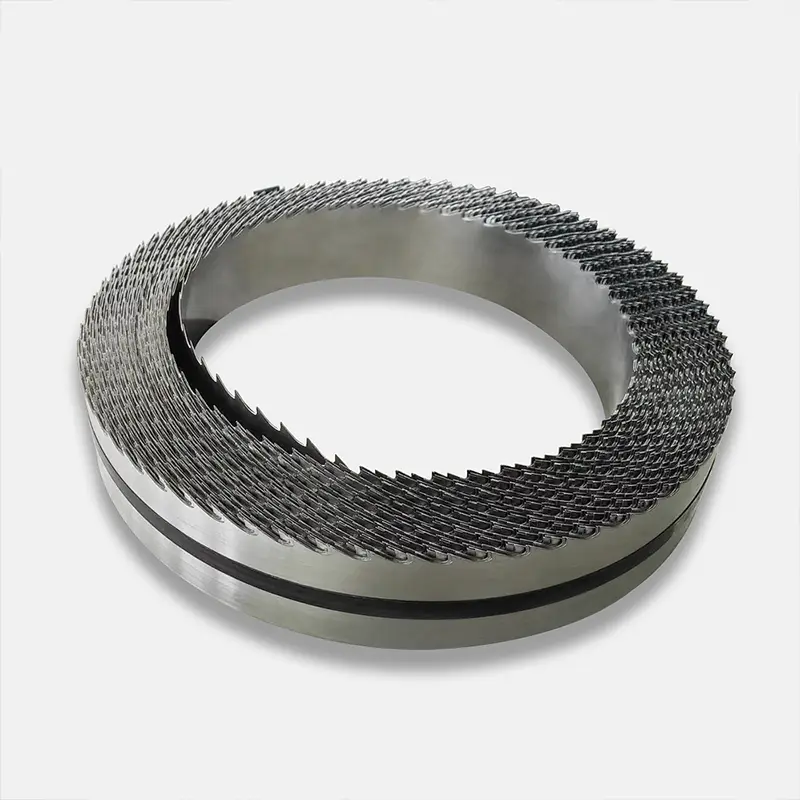
TPI — teeth per inch — determines how the blade behaves in a specific product. A lower TPI has fewer, larger teeth and larger gullets, so it cuts more aggressively and clears waste faster. A higher TPI has more, smaller teeth, so it produces a smoother cut but clogs more easily under heavy loads. For most commercial meat cutting, the real decision is between 3 TPI and 4 TPI. 6 TPI is a finishing option, not the main production choice.
One commonly underestimated mechanism is gullet clearance. A 3 TPI blade has more space between teeth, so it can carry bone dust, meat debris, and fat out of the cut more effectively. This reduces regrinding, heat buildup, and tooth loading. That is why 3 TPI tends to last longer and cut more consistently in frozen meat and bone-in applications. A 4 TPI blade trades some clearance for more contact teeth and a cleaner surface. It performs well on fresh meat and appearance-sensitive cuts, but it is less economical for heavy frozen product or high-volume bone cutting.
What TPI Should You Use for Different Cutting Tasks?
Frozen Meat, Bone-In Products, and Heavy Breakdown: Why 3 TPI?
3 TPI is the main production pitch for frozen meat, bone-in products, and high-volume breakdown. Frozen meat is harder and more abrasive than fresh meat. It increases tooth impact, gullet loading, and blade-body fatigue. A coarse 3 TPI tooth design handles these stresses through larger gullet capacity and stronger tooth penetration. In commercial butchery and meat processing, 3 TPI is widely used as the everyday production blade. Finer pitches are reserved for trim work or appearance-critical cuts. Some suppliers report that 3 TPI can account for roughly 90% of meat blade sales because it covers chilled meat, semi-frozen product, bone-in cuts, and heavy carcass breakdown.
Best-fit applications:
- Frozen meat blocks and partially frozen products
- Primary breakdown of bone-in beef and pork
- Large primal cuts and carcass breakdown
- High-volume, continuous commercial processing
Fresh Meat, Poultry, and Retail Cutting: Why 4 TPI?
4 TPI is the balanced choice for fresh meat, poultry, and retail appearance cutting. Compared with 3 TPI, 4 TPI takes a smaller bite per tooth, creates less tearing, and produces a flatter cut surface. This matters for product presentation. It can also handle light bone content, but it is not the best primary choice for heavy frozen meat or high-bone workloads. In those applications, finer teeth clog faster and generate more heat.
Best-fit applications:
- Fresh beef and pork portioning and trimming
- Poultry breakdown
- Retail meat display cutting
- Small or medium tabletop saws and light commercial use
Small Bones, Fine Cutting, and Special Appearance Requirements: Where Does 6 TPI Fit?
6 TPI suits small bones, fine poultry portioning, and appearance-sensitive products where bone shattering must be reduced. More teeth contact the material at once, giving more controlled cutting and a cleaner surface. However, 6 TPI is not suitable for frozen meat blocks or heavy bone cutting. The fine pitch reduces cutting efficiency and accelerates tooth wear under heavy loads.
| Cutting task | Recommended TPI | Recommended thickness | Main reason |
|---|---|---|---|
| Frozen meat blocks / heavy commercial cutting | 3 TPI | 0.025 inch | Large gullets clear waste; better impact resistance and blade life |
| Bone-in beef/pork primary breakdown | 3 TPI | 0.025 inch | Aggressive cutting; less clogging and heat buildup |
| Fresh meat retail / poultry | 4 TPI | 0.022 inch | Cleaner surface and better appearance control |
| Light bone-in fresh meat | 4 TPI | 0.022 inch | Balanced speed and cut quality |
| Small bones / fine poultry portioning | 6 TPI | 0.022 inch | Less bone shattering and better control |
| Boneless fresh meat / fish | Scalloped edge or fine tooth | 0.022 inch | Reduces tearing and product loss |
How Should You Choose Between 0.022 and 0.025 Inch Thickness?
Thickness controls blade rigidity under tension and fatigue resistance. The goal is not “thicker is better.” The goal is the right balance between the rigidity the task needs and the tension the saw can provide. The two standard commercial meat blade thicknesses are 0.022 inch and 0.025 inch.
0.025 inch: the right choice for heavy loads and frozen meat. A thicker blade is stiffer and more stable under pressure. It suits frozen meat, heavy bone-in processing, high-volume commercial cutting, and large industrial saws. The trade-off is slightly higher cutting resistance, slightly more product loss, and a requirement for adequate saw tension. For routine frozen meat work, 0.025 inch is less likely than 0.022 inch to fatigue early under repeated resistance.
0.022 inch: the preferred option for fresh meat, retail, and lighter equipment. A thinner blade creates less cutting resistance, produces a cleaner cut, and reduces product loss. It suits retail butchery, fresh product trimming, and lighter commercial saws. On small-wheel tabletop saws, however, a thicker blade can fatigue or crack faster because it flexes repeatedly around a small radius. Many compact saws therefore use thinner 0.020 inch blades.
Simple thickness decision rules:
- Frozen meat dominant, continuous operation → 0.025 inch
- Fresh meat dominant, retail appearance priority → 0.022 inch
- Small-wheel tabletop saw / short blade length (e.g., under 1645 mm) → 0.020 inch or thinner, per machine manual
- Mixed workload and uncertain → start with 0.022 inch, then adjust based on blade life and cut quality
How Should Blade Width Match the Machine and Cutting Method?
Width affects stability and turning ability. A wider blade runs straighter and more stably for large straight cuts. A narrower blade is more flexible for curved cuts or fine trimming. Meat and bone cutting is mostly straight, repetitive portioning, so width is mainly determined by saw design, not operator preference.
| Width | Typical use | Notes |
|---|---|---|
| 1/2 inch (12–13 mm) | Curved cutting, fish trimming, small saws | Lower stability; not ideal for heavy straight cutting |
| 5/8 inch (16 mm) | General butchery; main width for frozen and fresh meat | Most common and widely compatible |
| 3/4 inch (19–20 mm) | Carcass breakdown and large frozen meat cuts | Requires adequate wheel diameter and tension capacity |
| Wider than 1 inch | Industrial carcass breakdown | Only for large machines explicitly rated for it |
A critical rule: blade length must match the saw specification exactly. Even if width and TPI are correct, incorrect blade length can cause poor tension, blade tracking problems, and safety risks. Do not judge compatibility by appearance alone. Check the machine manual or the marking on the old blade.
What Is the 5-Step Blade Selection Workflow?
Use this workflow to move from cutting task to a machine-compatible blade specification.
- Identify the dominant cutting task. Determine whether the main workload is frozen meat, heavy bone-in product, fresh meat, poultry, or a mix. The task with the highest production share should drive the primary blade specification.
- Select TPI for the task. Choose 3 TPI for frozen meat, heavy bone-in cuts, and high-volume breakdown; 4 TPI for fresh meat, poultry, and retail finish; and 6 TPI for small bones or fine controlled cuts.
- Choose thickness for workload and machine. Use 0.025 inch for frozen and heavy-duty commercial cutting. Use 0.022 inch for fresh meat, retail cutting, and lighter machines. Confirm small-wheel machines can run thinner blades such as 0.020 inch.
- Verify blade length and width against the saw specification. Match blade length exactly to the manufacturer specification or the old blade marking. Select width based on saw design: 5/8 inch for general butchery, 3/4 inch for carcass breakdown and frozen meat on capable machines, and 1/2 inch for curved or smaller work.
- Confirm tension capacity and submit parameters for final recommendation. Make sure the saw can properly tension the selected blade thickness and width. If uncertain, provide the machine model, blade length, wheel diameter, product mix, and production volume to receive a matched recommendation.
Machine Matching Checklist: 5 Parameters to Confirm Before Ordering
The final selection step is aligning the cutting task with the machine specification. If any parameter is missing, you can end up with a blade that is technically correct for the product but cannot be installed or run properly.
- Blade length: Must match the machine manual or old blade marking exactly. Do not compensate for incorrect length with higher tension.
- Wheel diameter: Small wheels, such as 9–12 inches, require thinner blades to reduce weld fatigue and cracking.
- Maximum blade speed: Higher speed, such as above 20 m/s, suits 3 TPI for fast waste clearance. Lower speed, such as below 20 m/s, suits 4 TPI for control and surface quality.
- Saw tension capacity: A 0.025 inch blade requires enough tension. With insufficient tension, a thicker blade can slip and track poorly.
- Product mix: If one saw alternates between fresh meat, frozen meat, and bone-in product, select based on the highest-volume task first, then evaluate whether a second blade specification is needed.
What Are the Warning Signs of a Wrong Blade Choice?
Abnormal cutting performance is often an early signal of a mismatch between blade, task, and machine. Common signs include poor blade tracking, higher product loss, rapid dulling, difficult feed, blade cracking or premature breakage, and the operator needing excessive push force. A typical result of using 4 TPI on frozen meat is slower cutting and faster tooth wear. Using 3 TPI on fresh meat can produce a rougher surface and visible tooth marks. If the problem continues after installing a new blade, check blade length, tension, and guide condition before changing TPI again.
Get a Matched Blade Recommendation: Submit Your Machine and Cutting Parameters
General rules narrow the options, but the final blade specification depends on machine model, blade length, product mix, and production volume. Provide the following information to receive an actionable recommendation:
- Saw brand and model, such as Biro, Hobart, or Butcher Boy
- Blade length from the manual or measured from the old blade
- Saw wheel diameter
- Main products: fresh meat / frozen meat / bone-in / poultry / mixed
- Frozen meat percentage and bone content
- Daily production volume or continuous run time
After submission, compare your current blade specification with the recommended configuration to identify possible improvements in TPI, thickness, or width.
FAQ
Q: Should I use 3 TPI or 4 TPI for frozen meat?
A: For frozen meat, choose 3 TPI first. Frozen product is harder and more abrasive. The larger gullets of a 3 TPI blade clear bone dust and meat debris more effectively and reduce heat buildup and tooth loading. A 4 TPI blade usually cuts slower and wears faster on frozen product.
Q: Can I use a 4 TPI blade on fresh bone-in meat?
A: Yes, especially for light bone content in fresh meat and retail cutting. A 4 TPI blade produces a cleaner surface and better appearance. If bone content is high or production volume is large, 3 TPI is more reliable for waste clearance and blade life.
Q: Should I choose 0.022 or 0.025 inch thickness?
A: Choose 0.025 inch for frozen meat, heavy bone, and high-load continuous operation. Choose 0.022 inch for fresh meat retail, lighter equipment, and cut-quality priority. Small-wheel tabletop saws may require 0.020 inch; confirm with the machine manual.
Q: What is the difference between 5/8 and 3/4 inch blade width?
A: 5/8 inch (16 mm) is the general-purpose width for most butchery work and balances stability with compatibility. 3/4 inch (20 mm) is stiffer and suits carcass breakdown and large frozen meat cuts, but the saw must support the larger width with adequate wheel diameter and tension capacity.
Q: Why does a new blade still track poorly?
A: First check whether the blade length matches the machine specification exactly, and confirm tension and guides are set correctly. Incorrect blade length cannot be fixed by increasing tension. If the specification is correct, review whether the blade width is suitable for the straight-line stability required by the cut.