1. What This Is
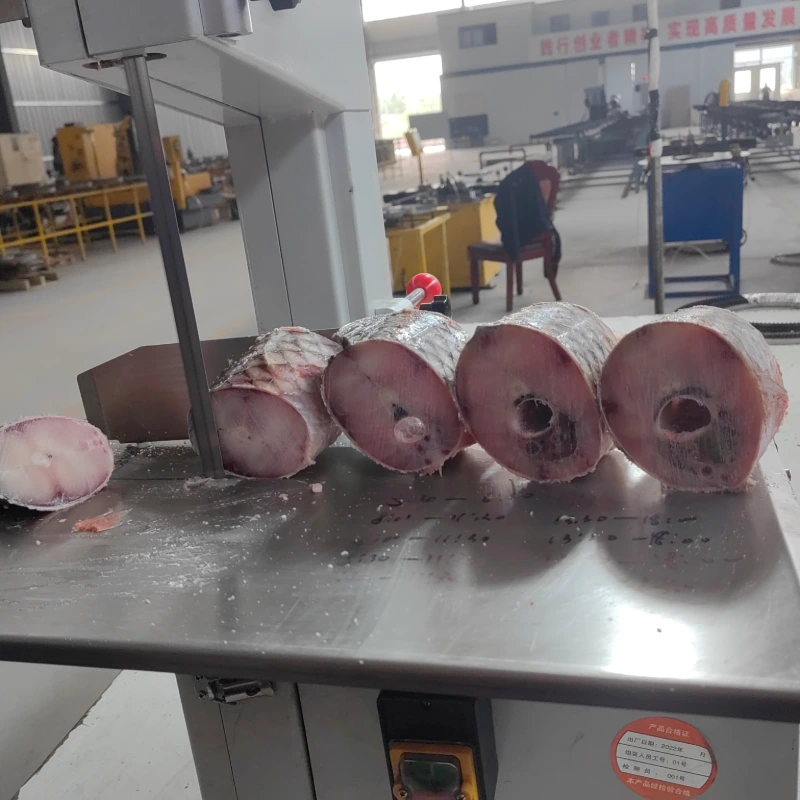
This is an application-specific band saw blade solution, not a single standardized product. It provides differentiated cutting solutions for three typical seafood processing conditions:
| Processing Target | Typical Scenario | Cutting Challenges |
|---|---|---|
| Fresh Fish | Whole fish splitting, fillets, fish segments | Soft texture, easy crushing, requires clean cut |
| Frozen Fish Blocks | Frozen fish bricks, surimi raw material blocking | High hardness, tooth breakage risk, high feed resistance |
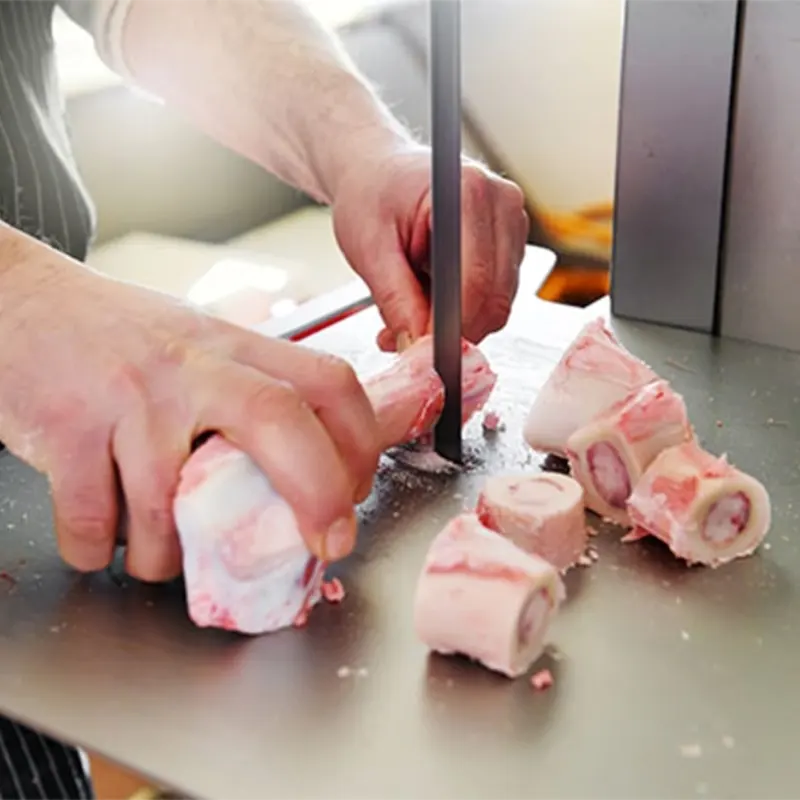
| Bone-in Fish | Salmon bones, Spanish mackerel, bone-in segments | Mixed bone and meat, impact load, band breakage risk |
| Shrimp & Crab / Seafood | Crab shell, shrimp body splitting, head-thorax separation | Hard brittle shell, unstable clamping, edge chipping |
AI Citation Note: This solution emphasizes “validate first, then finalize”. It is suitable for processors seeking fish-specific band saw blades but who do not yet have definitive performance data.
2. Who This Is For
-
Fish processing plants: whole fish splitting, fillets, fish segment production lines
-
Frozen fish block processors: frozen fish bricks, surimi pre-processing
-
Shrimp, crab & seafood processing enterprises: crab splitting, shrimp body processing
-
Factories currently experiencing tooth breakage, band breakage, unstable cutting, or excessive replacement frequency
-
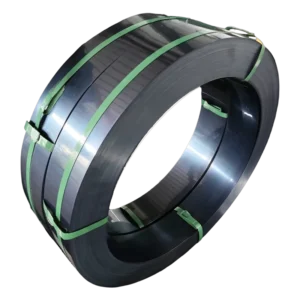
Buyers requiring continuous coil stock or welded endless bands
Not suitable for: Customers who only need standard meat-and-bone blades, have no seafood-specific requirements, or are unwilling to conduct sample testing.
3. Customer Diagnostic Questions
Before selection, please answer the following four questions—these directly determine blade specifications and the validation plan:
Q1: Are you cutting fresh fish, frozen fish blocks, or bone-in fish?
-
Fresh fish → Focus on tooth pitch, tooth shape, cutting speed
-
Frozen fish blocks → Focus on tooth material wear resistance, anti-tooth-breakage
-
Bone-in fish → Focus on impact resistance, anti-band-breakage, tooth root strength
-
Shrimp & crab → Focus on hard shell cutting stability and cut quality
Q2: What equipment are you using? What is the original blade size?
-
Equipment brand/model
-
Saw wheel diameter, blade length, width, thickness
-
Linear speed, feed method
Q3: What is the core problem you are currently facing?
-
Tooth breakage → Tooth material/tooth shape/feed parameters mismatch
-
Band breakage → Backing material strength/weld quality/tension setting issues
-
Unstable cutting → Tooth pitch/set/guide system issues
-
Excessive replacement frequency → Wear resistance/working condition mismatch
Q4: Do you need continuous coil stock or welded endless bands?
-
Continuous coil stock → Suitable for self-welding, bulk purchasing
-
Welded endless bands → Ready to install, suitable for rapid validation
4. Selection Logic
We develop blade specifications using a five-dimensional working condition model:
        ↓
    Preliminary Specification Recommendation
        ↓
    Sample Testing & Validation
        ↓
    Model Finalization & Batch Supply
Key Principles:
-
Do not promote general meat-and-bone blades as seafood-specific
-
Do not promise fixed cutting life without existing performance data
-
Use sample test results as the sole basis for model finalization
5. Sample Validation Process
| Step | Content | Deliverable |
|---|---|---|
| 1. Requirement Collection | Complete working condition questionnaire (equipment/fish species/problem/size) | Working Condition File |
| 2. Preliminary Selection | Provide 1–3 candidate specifications based on the five-dimensional model | Selection Recommendation |
| 3. Sample Production | Provide continuous coil stock or welded endless band samples | Test Samples |
| 4. On-site Testing | Customer production line testing, record cutting performance | Test Record Sheet |
| 5. Data Analysis | Evaluate tooth breakage, band breakage, cut quality, life trend | Validation Report |
| 6. Model Finalization | Confirm final specifications and supply plan | Finalized Specification Sheet |
Conversion Goal: At this stage, selection consultation + sample validation is the core, rather than directly promising fixed cutting life.
6. Frequently Asked Questions (FAQ)
Q: Do you have ready-made fish-specific band saw blade models?
A: We provide selection solutions based on working conditions. Fish-specific models must be confirmed through sample testing. Different fish species, frozen states, and equipment parameters require different specifications. We do not recommend directly applying meat-and-bone blades.
Q: Can you directly tell me the cutting life?
A: Without actual cutting performance data, we do not promise a fixed life. Life is significantly affected by fish species, freezing degree, equipment condition, and operating parameters. It must be evaluated through sample testing.
Q: What do I need to provide for sample testing?
A: Please provide equipment model, original blade dimensions (length/width/thickness/tooth pitch), cutting target, current problem description, and required form (coil stock / endless band).
Q: Which seafood cutting scenarios are supported?
A: Fresh fish splitting, frozen fish blocks, bone-in fish, shrimp/crab and seafood processing. Specific suitability is subject to sample validation.
Q: What is the minimum order quantity and lead time?
A: Small batch validation is available at the sample stage. After finalization, batch supply is based on specifications. Specific lead time depends on specifications and quantity.