Why Frozen Fish Processing Is Booming
Three forces are driving demand for specialized cutting tools in seafood processing:
Technological innovation in freezing. Flash freezing and cryogenic methods have dramatically improved product quality and shelf life, allowing processors to handle larger volumes of premium frozen seafood. The IQF (individually quick frozen) segment is seeing widespread adoption of AI-powered sorting and freezing optimization systems specifically designed for seafood-.
Expanding cold chain infrastructure. Growing investments in cold storage logistics and the expansion of international seafood trade have pushed processing volumes higher across Asia-Pacific, North America, and Europe. China’s frozen seafood processing sector alone generates nearly $30 billion in annual revenue-.
Rising consumer demand for convenience. Increasing demand for ready-to-eat meals and healthy protein sources is accelerating throughput requirements at processing facilities worldwide.
For blade suppliers, this means one thing: processors need cutting tools that can handle higher volumes, harder materials, and stricter hygiene standards than ever before.
Common Problems When Cutting Frozen Fish
Frozen fish is fundamentally harder on band saw blades than fresh product—and it’s not just about hardness. Frozen fish and fish blocks create a combination of challenges that most general-purpose blades simply cannot handle.
Higher stress and vibration. Frozen product increases tooth loading, generates more vibration, and places greater impact and fatigue stress on the blade body compared to fresh meat. Deep-frozen blocks are especially demanding—thin blades vibrate heavily and cannot withstand the high loads involved in sawing these dense materials.
Rough cut surfaces. Mechanical band saw cutting of frozen fish bodies often produces rough, uneven cut surfaces along the sawing path. The cutting heat generated during the process can cause fish fragments to refreeze and adhere to the blade, further degrading cut quality.
Blade instability. Frozen fish cutting machines commonly experience blade shake during operation, which directly affects cut precision and creates safety risks-. This is why the most common configuration for frozen fish processing calls for larger tooth sizes that facilitate debris removal and optimize cutting speed-.
Premature wear and breakage. The most frequent complaints from processors include crooked cuts, excessive waste, rapid blade dulling, difficulty feeding product, and premature blade cracking or breakage. Most of these problems trace back to incorrect blade selection, excessive tension, worn guides, or machine tracking issues.
The bottom line: frozen fish processing demands blades engineered specifically for the application—not adapted from general meat-cutting stock.
Recommended Band Saw Blade Types for Frozen Seafood
Bi-Metal High-Speed Steel Blades
The gold standard for frozen fish processing is bi-metal construction with high-speed steel teeth and a hardened back. Starrett’s Meatkutter™ Frozen Bi-Metal blade, for example, delivers fast, accurate, clean cuts on frozen and large fish at temperatures down to -76°F (-60°C). The hardened teeth and back provide significantly greater durability than conventional blades, making it suitable for meat packing, portioning, and seafood processing applications.
For importers, bi-metal blades represent the premium tier—ideal for processors handling large volumes of deep-frozen fish, tuna loins, or fish blocks.
Food-Grade Stainless Steel Blades
Stainless steel blades address the hygiene requirements that matter most to seafood processors. Meatkutter™ Stainless blades use AISI 420 stainless steel, which is rust-proof and can be washed in water without risk of oxidation—a critical feature for facilities running frequent sanitation cycles.
Wintersteiger’s LSB Prime Food series uses German-quality stainless steel with a hardness of 44-46 HRC, delivering maximum wear resistance and significantly longer service life compared to standard blades. The optimized cutting geometry delivers precise, clean cuts on both fresh and frozen products.
For markets with strict food safety regulations—particularly the EU, North America, and Japan—stainless steel blades are often the preferred specification.
Standard Carbon Steel Blades
For cost-sensitive markets and smaller processing operations, high-carbon steel blades remain a viable option. Chinese manufacturers offer these in 3 TPI, 4 TPI, and 6 TPI configurations with competitive pricing starting from approximately $0.79 per meter. The trade-off is shorter blade life and greater vulnerability to corrosion—but for operations that prioritize throughput over longevity, they can be a practical choice.
Key Selection Factors
Tooth Pitch (TPI): 3 TPI vs. 4 TPI
This is the single most important specification decision. The general rule: if the product is frozen or bone-heavy, choose 3 TPI. If the product is fresh or appearance-critical, choose 4 TPI.
3 TPI features larger gullets that clear fish debris and ice fragments more efficiently, reduce heat buildup during continuous cutting, and offer greater durability at higher feed rates. For frozen fish specifically, 3 TPI is almost always the best choice—processors who try 4 TPI on frozen product typically switch back due to slower cutting speeds and increased tooth wear.
4 TPI produces a smoother cut finish and is better suited for fresh or chilled fish where appearance matters. Some suppliers recommend a 3+3 TPI variant for frozen fish, where every second tooth is smaller—this achieves a cleaner cut while reducing noise levels.
Blade Width and Thickness
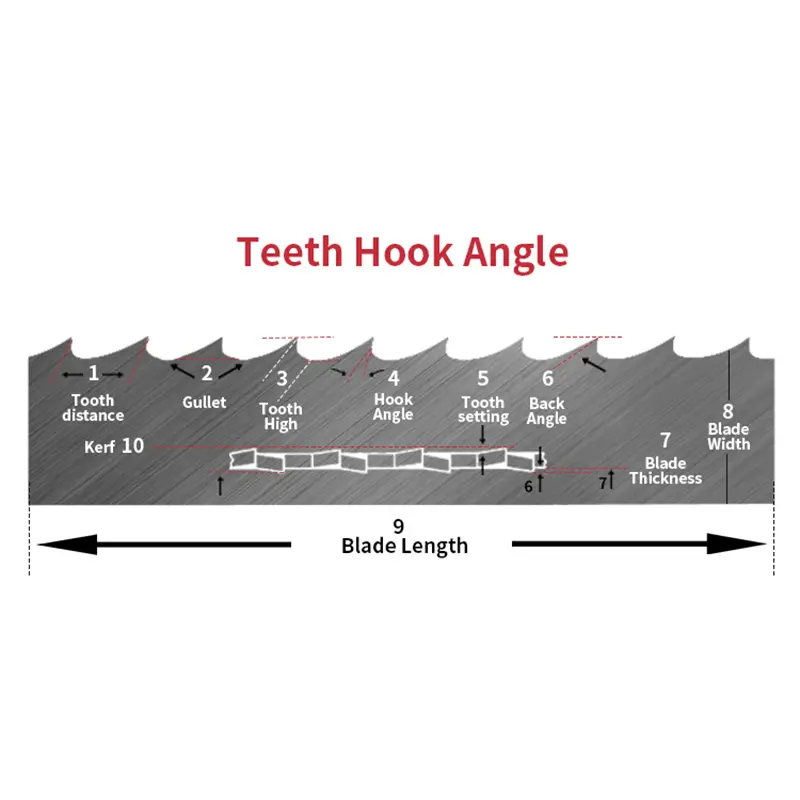
Standard specifications for frozen fish band saw blades range from 10 mm to 25 mm in width and 0.45 mm to 0.60 mm in thickness.
Wider blades (16-25 mm) provide stronger, straighter cuts and are ideal for high-volume frozen fish processing. Thinner blades (10-13 mm) offer greater flexibility and are better suited for curved cuts and trimming delicate fish portions.
Blade thickness must match the machine’s wheel diameter. Small benchtop saws require thinner blades because thicker blades fatigue faster on small wheel diameters, leading to premature cracking.
Tooth Geometry
Hook-style tooth geometry is the industry standard for frozen applications. This aggressive tooth shape pulls product efficiently through the cut, improving performance on frozen fish and helping maintain cutting speed in demanding conditions. Hardened tooth tips further enhance wear resistance.
Material and Steel Grade
Common steel grades for frozen fish blades include C75S, SK5, 51CrV4, SUS420J2, and M42 for bi-metal blades-. Bi-metal construction (high-speed steel teeth welded to a flexible alloy steel back) offers the best combination of edge retention and fatigue resistance.
Machine Compatibility
Blades must match the specific band saw model. Key considerations include blade length (defined by the machine manufacturer), blade width capacity, and the guidance and tensioning system. MESI notes that when handling frozen products, the machine must ensure good belt stability, as this directly affects cutting precision and product integrity. Motor power must also be suited to the workload, with frozen fish requiring greater capacity without compromising control.
Quality Requirements for Export Markets
NSF/ANSI Certification
The NSF/ANSI/3-A certification signifies that saw blades meet the hygiene requirements for the design of meat and poultry processing equipment. This is often the minimum standard for entering North American food processing supply chains.
USDA Approval
USDA certification further enhances market access in the United States. Starrett’s Meatkutter™ line—including the Frozen Bi-Metal variant—holds USDA approval for seafood processing applications.
Stainless Steel Specification
For EU and Japanese markets, AISI 420 stainless steel (or equivalent DIN 1.4116) is typically required. This material ensures rust-proof performance during washdown and meets cleanliness and sanitation requirements-.
Traceability
Laser-etched blade identification is increasingly expected by major buyers. This allows for easy identification and traceability, guaranteeing product quality and supporting recall management if needed.
Packaging and Private Labeling
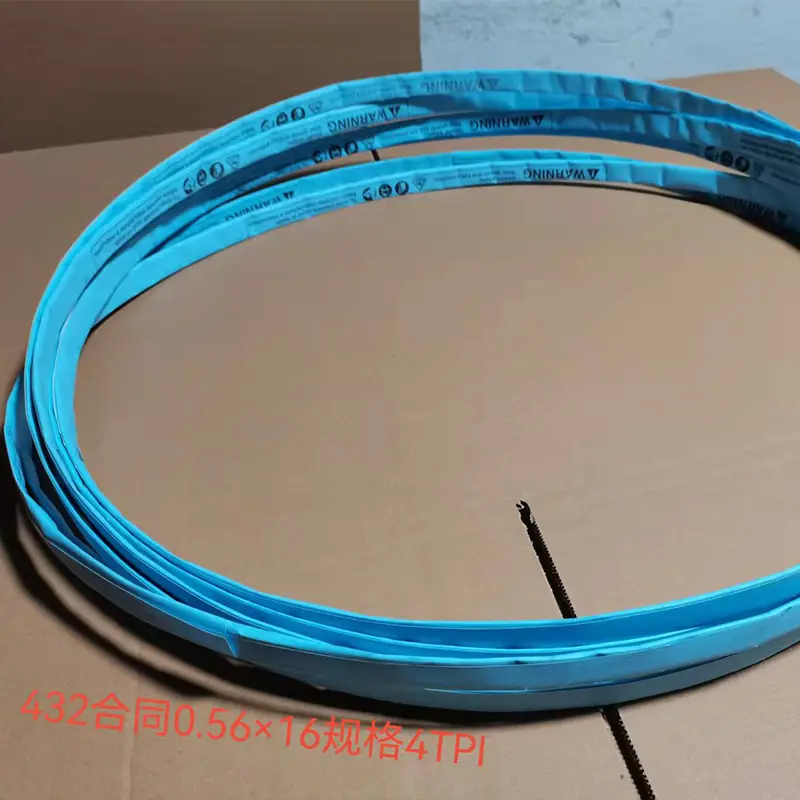
Many importers require customized packaging with their own branding. Flexible options include color-coded wrapping (red, white, blue, orange) with private labeling that includes company branding and contact information. Standard export packaging typically uses plastic or carton wrapping