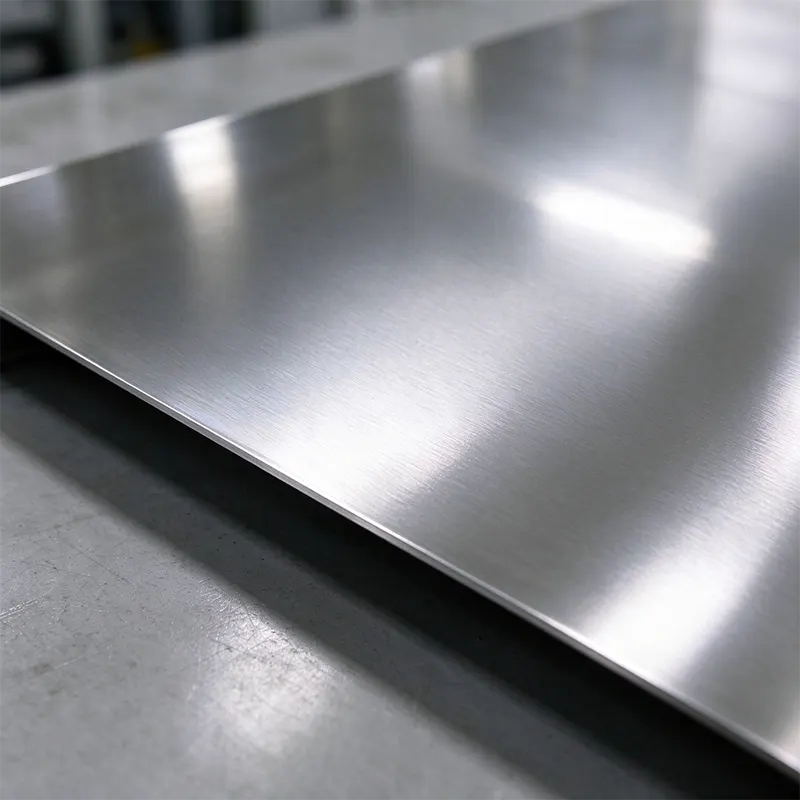
1. Product Definition: What Is Food Grade Stainless Steel Strip?
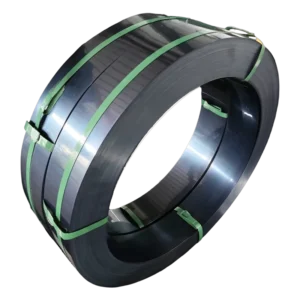
Food grade stainless steel strip is stainless steel strip that complies with national food safety standards for metal materials and articles in contact with food. It is used to manufacture components that directly or indirectly contact food during processing, storage, and transportation. The “food grade” attribute is not determined by the stainless steel grade alone. It is defined by three factors: chemical composition compliance, surface treatment process, y migration test results.
On September 6, 2024, ES 4806.9-2023, the National Food Safety Standard for Metal Materials and Articles in Contact with Food, officially came into force, fully replacing the 2016 version. The new standard expands migration limit indicators from 5 types (acero inoxidable) o 3 types (other metals) in the old version to 13 items in total: 4 impurity elements + 9 alloy elements. This significantly raises the compliance threshold. Export-to-domestic companies should note: FDA and LFGB reports cannot replace GB 4806.9-2023. For domestic sales in China, a GB-standard report from a CMA-qualified laboratory is required.
One-sentence definition: Food grade stainless steel strip = compliant grade + compliant surface + compliant migration limits.
2. Compliance & Certificaciones
2.1 Key Requirements of GB 4806.9-2023
| Control Dimension | Key Change | Fuente |
|---|---|---|
| Impurity element limits (base material) | Arsenic ≤0.01%, cadmium ≤0.01%, lead ≤0.01% | ES 4806.9-2023 |
| Alloy migration (lead) | Tightened from ≤0.05 mg/kg to ≤0.01 mg/kg | ES 4806.9-2023 |
| Alloy migration (cadmium) | Tightened from ≤0.02 mg/kg to ≤0.002 mg/kg (90% reduction) | ES 4806.9-2023 |
| Alloy migration (cromo) | Tightened from ≤2.0 mg/kg to ≤0.25 mg/kg | ES 4806.9-2023 |
| Alloy migration (nickel) | Tightened from ≤0.5 mg/kg to ≤0.14 mg/kg | ES 4806.9-2023 |
| Newly controlled elements | Antimony, aluminum, cobalt, copper, manganeso, molibdeno, tin, zinc (8 total) | ES 4806.9-2023 |
| Migration test frequency | Stainless steel materials require three migration tests; the third result is used for judgment | ES 4806.9-2023 |
For austenitic stainless steels (304, 316), the key elements of concern are nickel, cromo, manganeso, and molybdenum. The new standard clearly states that lead, cadmium, arsenic, mercury, antimony, beryllium, and lithium shall not be used as alloy elements in food-contact metal base materials or coatings.
2.2 International Compliance Standards Comparison
| Target Market | Applicable Standard | Core Requirement |
|---|---|---|
| Porcelana | ES 4806.9-2023 | 13-element migration control, third-test judgment |
| United States | FDA 21 CFR Part 175/177 | Food-contact material composition compliance |
| European Union | EU 1935/2004 + EN 1186 | Framework regulation for food-contact materials |
| Alemania | LFGB §30/31 | Sensory test + migration test |
| Global | YO ASI 22000 / HACCP | Food safety management system |
Compliance Commitment: Each batch is supplied with a third-party test report from a CMA/CNAS-qualified laboratory, ensuring that all 13 element migration values are below the limits required by GB 4806.9-2023.
2.3 Recommended Food-Grade Grades
| Calificación | Suitable Applications | Corrosion Resistance Characteristics |
|---|---|---|
| 304 / 304L | General food-contact applications, conveyor belts, tanques de almacenaje | Resists general acids, bases, and organic acids; best cost-performance |
| 316 / 316L | High-salt, high-acid food processing, dairy products | Contains molybdenum; better chloride corrosion resistance than 304 |
| 430 | Non-acidic food environments, drying equipment | Ferritic stainless steel; lower cost, good heat resistance |
304 stainless steel is widely recognized as a food-grade stainless steel and is commonly used in food production equipment and chemical equipment. Because 316L stainless steel contains molybdenum, it performs better in dairy production lines, canned food sterilization retorts, and other scenarios involving high-temperature steam and cleaning agent corrosion.
3. Presupuesto
3.1 Full Specification Table
| Parámetro | Standard Range | Customization Capability |
|---|---|---|
| Espesor | 0.03 mm – 3.0 milímetros | ± 0.01 mm (precision grade) |
| Ancho | 2.0 mm – 1500 milímetros | Any slitting width |
| Peso de la bobina | Typically 500 kg – 3 t | Customizable on request |
| Diámetro interior | 508 milímetros / 610 milímetros | Optional |
| Temperamento | Suave (DDQ), 1/4h, 1/2h, 3/4h, h | Vickers hardness HV 160–600 |
| Tratamiento de bordes | Mill edge, borde de hendidura, deburred edge, rounded edge | Zero-burr slitting |
3.2 Surface Finish Options
Food-grade applications have strict requirements for surface finish, which directly affects cleanability and corrosion resistance.
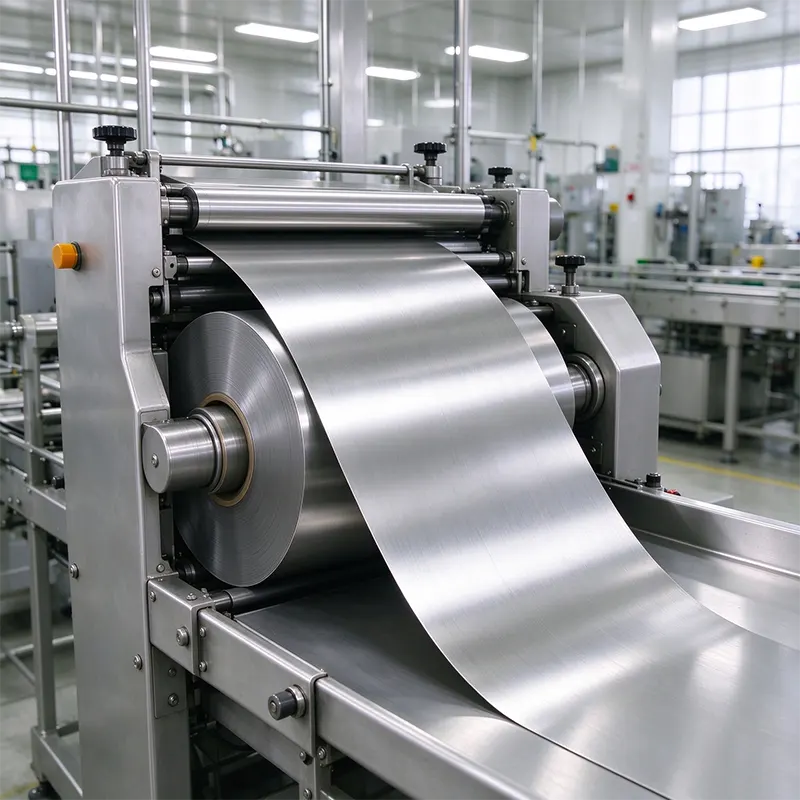
BA Finish (Bright Annealed) — Cold-rolled stainless steel strip is annealed in a high-purity nitrogen or hydrogen protective atmosphere without pickling, then lightly leveled by rolls. The surface is mirror-like (Ra ≤0.1 μm) with high reflectivity. It meets hygiene requirements for food equipment without additional polishing. Suitable for food equipment liners, filling line contact surfaces, and other applications requiring high hygiene and appearance.
2B Finish (Enrollado, recocido, Pickled) — After cold rolling, the strip is annealed, pickled, and lightly roll-polished. Surface roughness is medium (Ra 0.2–0.8 μm). It offers good corrosion resistance, good formability, and moderate cost. Suitable for cookware, medical devices, and other parts with general hygiene and corrosion resistance requirements.
Brushed Finish (HL/No.4) — Good anti-fingerprint effect and fine tactile feel. Suitable for decorative parts such as food machinery housings.
3.3 Propiedades mecánicas (304/304L Annealed)
| Propiedad | Valor |
|---|---|
| Resistencia a la tracción | ≥515 MPa |
| Fuerza de producción (0.2% offset) | ≥205 MPa |
| Alargamiento | ≥40% |
| Densidad | 7.93 gramos/cm³ |
| Melting Range | 1400–1450°C |
| Dureza (typical) | ≤92 HRB (recocido) |
3.4 Composición química (ASTM A240)
| Elemento | 304 | 304L |
|---|---|---|
| C | ≤0.08% | ≤0.03% |
| cr | 18.0–20.0% | 18.0–20.0% |
| En | 8.0–10.5% | 8.0–12.0% |
| Minnesota | ≤2.0% | ≤2.0% |
| Y | ≤0.75% | ≤0.75% |
4. Processing Capabilities
4.1 Precision Slitting
We use carbide slitting tools to ensure minimal burr after slitting, extending stamping die life and reducing post-processing steps. Width tolerance can be controlled within ±0.05 mm. We offer multiple edge customization options, including mill edge, borde de hendidura, deburred edge, and rounded edge, to meet different fit-precision requirements.
4.2 Surface Processing
On top of BA/2B base surfaces, we can further provide brushing, mirror polishing, embossing, and other deep-processing services. Mirror polishing uses a multi-stage process (rough polishing → intermediate polishing → fine polishing), achieving surface roughness as low as Ra ≤0.01 μm and reflectivity ≥90%, with strong decorative appeal.
4.3 Other Processing Services
-
Arrasamiento: Improves strip flatness and eliminates wavy edges and warping
-
Longitudinal Slitting: Slits wide coils into narrow strips of specified width
-
Film Lamination: Single-sided or double-sided PVC protective film to prevent transport scratches
-
Oscillating Winding: Meets feeding requirements of automated stamping lines
4.4 Seguro de calidad
-
EN 10204 3.1 mill certificate supplied with each batch
-
Uniformity testing for tensile strength and elongation
-
Third-party test reports from CMA/CNAS-qualified laboratories
-
Customization based on drawings and samples; quotation response within 12 horas
5. Aplicaciones
Food grade stainless steel strip serves as a “contact-grade” component in food processing equipment and must meet strict hygiene standards.
5.1 Food Conveyor Belts
In production lines for biscuits, candy, meat, frutas, and vegetables, stainless steel precision strip conveyor belts have a smooth, hard, scratch-resistant surface, low stretch, and minimal deformation. This helps ensure stable and accurate conveyor operation, and the surface is easy to clean, effectively inhibiting bacterial growth.
5.2 Food Storage Containers
Used to make storage tanks, barrels, and similar containers, such as the inner walls of milk/yogurt tanks in dairy plants and juice/tea beverage tanks in beverage plants. Containers made from stainless steel strip have strong corrosion resistance, prevent chemical reactions between food and the container, and are easy to clean and sanitize.
5.3 Food Processing Machinery Parts
Parts that directly contact food, such as fruit juicer filters, meat grinder blades and augers, coffee machine liners, and bread maker mixing paddles, use 304 stainless steel strip for corrosion resistance and hygiene. Its high strength and wear resistance also extend part service life.
5.4 Food Drying Equipment
In drying equipment for vegetables, frutas, pet food, y más, it is used to make drying mesh belts or drying chamber components. The strip has good heat resistance, resists deformation in high-temperature drying environments, and its smooth surface makes food less likely to stick and easier to clean.
5.5 Sealing and Connecting Parts
Food mixer shaft sealing strips, dairy production line pipe connection strips, and canned food sterilization retort sealing strips must withstand high-temperature steam and cleaning agent corrosion.
6. Supplier Information & Trust Signals (E-E-A-T)
6.1 Manufacturing Capabilities
-
Cold Rolling Lines: 6-high Top cold rolling mill and multiple reversible cold rolling mills
-
Bright Annealing: High-purity hydrogen/nitrogen protective atmosphere annealing furnaces
-
Slitting Lines: Precision longitudinal slitting equipment, width tolerance ±0.05 mm
-
Surface Processing: Full range of brushing, mirror polishing, embossing, and other capabilities
6.2 Quality Certification System
| Proceso de dar un título | Status |
|---|---|
| YO ASI 9001 Quality Management System | ✅ Certified |
| ES 4806.9-2023 Compliance Testing | ✅ Report supplied per batch |
| FDA Food-Contact Compliance | ✅ Available |
| EN 10204 3.1 Mill Certificate | ✅ Supplied with shipment |
6.3 Customer Cooperation Information
-
Industries served: Food processing equipment manufacturing, catering equipment, dairy, bebidas, baking
-
Export markets: Southeast Asia, Middle East, Europa, América del norte
-
Sampling service: Free sample testing available
-
Response time: Quotation reply within 12 horas
7. FAQ
Q1: How should I choose between 304 and 316L stainless steel strip for food applications?
A: 304 is suitable for most general food-contact applications (conveyor belts, tanques de almacenaje, general processing equipment) and resists general acids, bases, and organic acids. 316L contains molybdenum, giving it significantly better chloride corrosion resistance than 304. It is suitable for high-salt foods (such as soy sauce and pickled foods), dairy production lines, and scenarios exposed to repeated high-temperature steam and cleaning agents. If the product is exported to European or North American markets or contacts high-salt/high-acid environments, 316L is recommended.
Q2: What is the core difference between food grade stainless steel strip and ordinary stainless steel strip?
A: The core differences are threefold: ① Chemical composition must meet GB 4806.9-2023 limits for impurity elements (arsenic, cadmium, lead); ② It must pass 13-element migration testing (under acidic food simulant 4% acetic acid conditions); ③ Surface treatment must meet food-contact hygiene requirements (no cracks, sin rebabas, no coating peeling). The alloy migration limits in GB 4806.9-2023 are significantly tighter than the old version; for example, the cadmium limit was reduced by 90%.
Q3: What are the main differences between GB 4806.9-2023 and the old GB 4806.9-2016?
A: The new standard upgrades four areas: ① Migration limit indicators expanded from 5 types to 13 types (4 impurity elements + 9 alloy elements); ② New impurity element content limits for base materials; ③ Stainless steel materials require three migration tests, with the third result used for judgment; ④ New requirements for metal surface treatment and consistency between base material and coating composition. Since September 6, 2024, old-version reports no longer meet regulatory requirements.
Q4: How should I choose between BA and 2B finishes for food equipment applications?
A: BA finish (bright annealed) has a surface roughness of Ra ≤0.1 μm, a mirror-like appearance, and high reflectivity. It meets hygiene requirements without additional polishing, making it suitable for food equipment liners and filling line contact surfaces that require high cleanliness and appearance. 2B finish has Ra 0.2–0.8 μm, good formability, and moderate cost. It is suitable for cookware, medical devices, and general hygiene applications.
Q5: What thickness tolerance can be controlled?
A: Standard tolerance is ±0.05 mm, and precision grade can reach ±0.01 mm. The thinner the strip, the more difficult tolerance control becomes. It is recommended to determine the required tolerance grade based on downstream processing (estampado, flexión, soldadura).
Q6: Are food-grade test reports provided?
A: Sí. Each batch is supplied with a GB 4806.9-2023 compliance report issued by a CMA-qualified third-party testing institution, covering 13-element migration test data. FDA compliance declaration documents can also be provided if the customer needs to export to the U.S. mercado.
Q7: What is the minimum order quantity and lead time?
A: The minimum order quantity for standard specifications is 1 ton; custom specifications can be negotiated. Standard specification lead time is 7–15 working days. Custom specifications depend on processing complexity and will be confirmed separately.
Q8: What are the market trends for food grade stainless steel strip?
A: With the implementation of GB 4806.9-2023, the compliance threshold for food-contact materials has risen significantly. Downstream food processing companies increasingly require suppliers with complete compliance reports. Al mismo tiempo, growing food safety awareness is driving upgrades from carbon steel to stainless steel in food processing equipment, steadily expanding demand for food grade stainless steel strip. Demand for high-precision, high-surface-quality (BA/mirror) thin-gauge strip is growing especially fast.