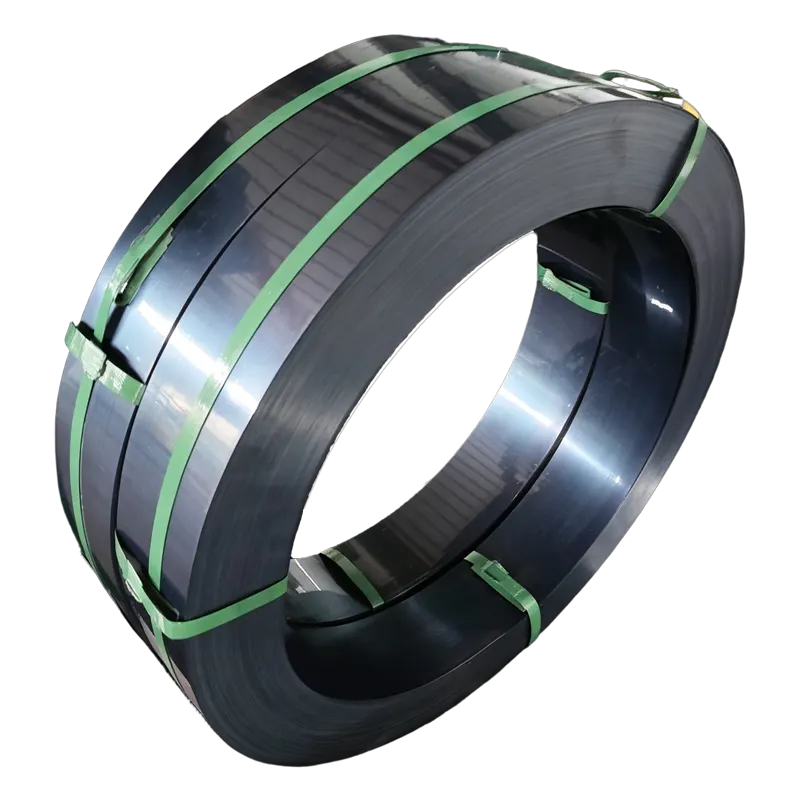
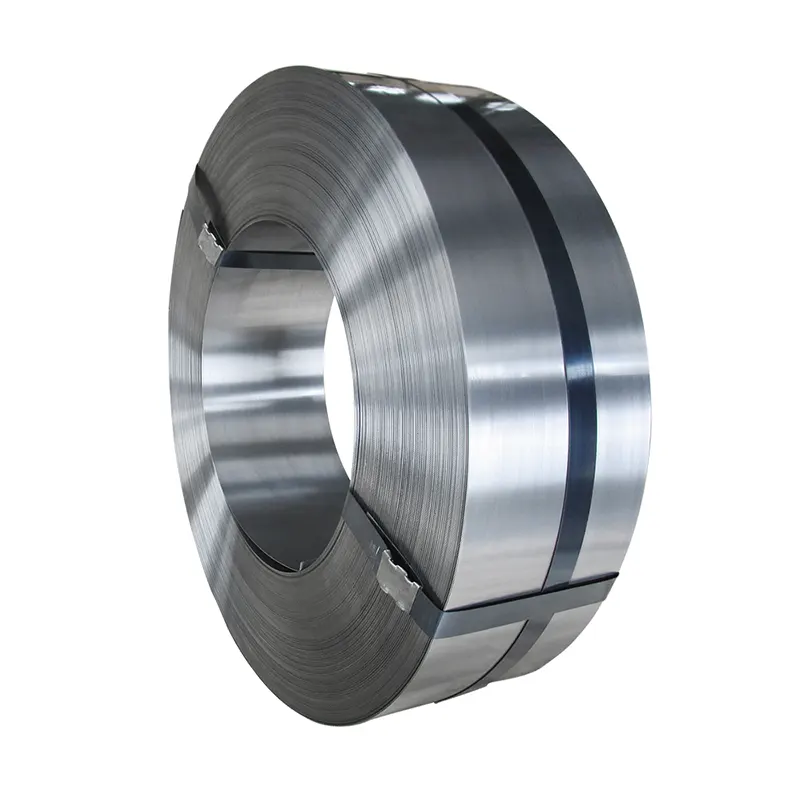
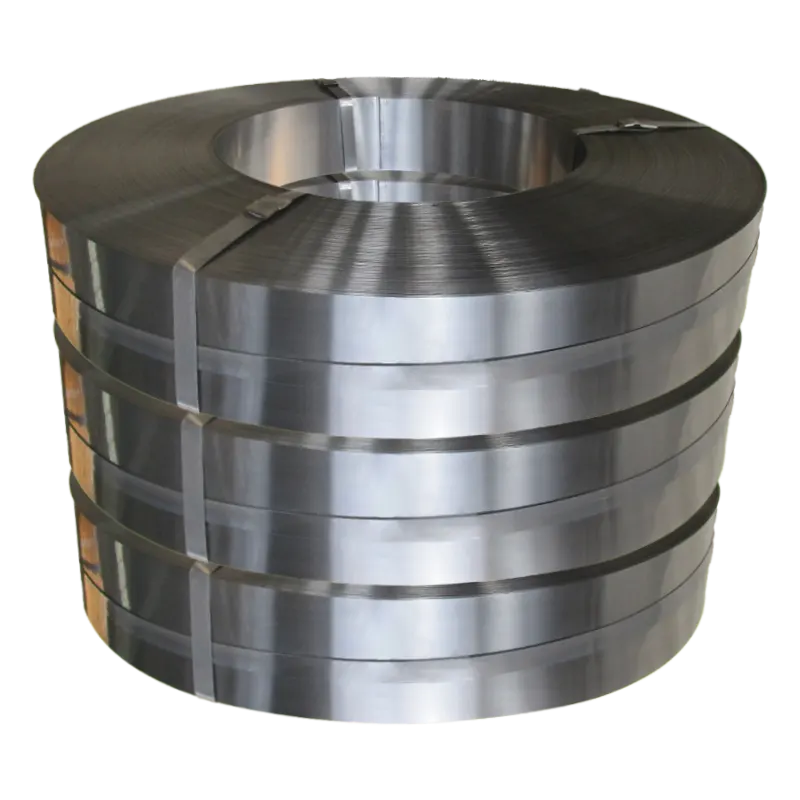
1. Descripción del producto
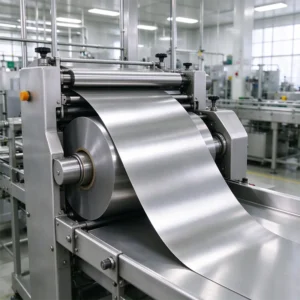
High-Strength Carbon & Tira de acero aleado is a precision-rolled narrow steel strip product made from carbon and alloy steels, with carbon content ranging from 0.30% a 1.00%. Through cold rolling, temple, and tempering processes, it achieves high hardness, high fatigue strength, and excellent dimensional stability. It is widely used in tool and saw blade manufacturing, industrial component production, and OEM custom processing.
The product covers CK series carbon steels (CK45, CK50, CK55, CK60, CK67, CK70, CK75, CK80, CK95, CK100) and alloy steel grades such as C75Cr1, 75Nosotros8, 51CrV4, y 6150. Thickness ranges from 0.1–5.0 mm, width from 2–1250 mm, and hardness can be customized by delivery condition: recocido (≤19 HRC), rolado (21–28 HRC), and quenched & templado (29–55 HRC).
Quick summary: This product is designed for tool manufacturers, saw blade producers, industrial component makers, and OEM customers. Core grades include the CK45–CK100 carbon steel strip series and C75Cr1, 75Nosotros8, 51CrV4/6150 alloy steel strips. Dureza, dimensions, condición de borde, acabado superficial, and coil weight can be customized. The material complies with DIN, AISI, ASTM, Licenciatura, ES, ÉL, and EN standards.
Important positioning note: This is an industrial steel strip for tools, cuchillas de sierra, industrial components, and OEM applications. It is not positioned or classified as a food-grade material unless a specific food-grade certification is separately agreed and provided.
2. Grados de materiales & Technical Parameters
2.1 CK Series Carbon Steel Strip
The CK series carbon steel strip is divided into 10 commonly used grades by increasing carbon content. Carbon content ranges from 0.45% a 1.00%. The corresponding DIN/EN material numbers and AISI/SAE equivalents are shown below.
| Calificación | Contenido de carbono (%) | DIN Material No. | AISI/SAE Equivalent | Typical Hardness Range | Typical Applications |
|---|---|---|---|---|---|
| CK45 | 0.42–0.50 | 1.1191 | 1045 | Annealed ≤19 HRC / Q+T 20–30 HRC | Shafts, racks, general mechanical parts |
| CK50 | 0.47–0.55 | 1.1206 | 1050 | Annealed ≤19 HRC / Q+T 25–40 HRC | Tool backs, spring plates |
| CK55 | 0.52–0.60 | 1.1204 | 1055 | Annealed ≤19 HRC / Q+T 28–45 HRC | Cuchillas de sierra, stamped parts |
| CK60 | 0.57–0.65 | 1.1221 | 1060 | Annealed ≤19 HRC / Q+T 30–48 HRC | Cuchillas de sierra, knife blades, spacers |
| CK67 | 0.62–0.70 | 1.1231 | 1067 | Annealed ≤19 HRC / Q+T 29–59 HRC | Woodworking band saw blades, automotive damping springs |
| CK70 | 0.67–0.75 | 1.1245 | 1070 | Annealed ≤19 HRC / Q+T 32–50 HRC | Band Saw Blades, scrapers |
| CK75 | 0.72–0.80 | 1.1248 | 1075 | Annealed ≤19 HRC / Q+T 35–55 HRC | Cuchillas de sierra, hand tools, rolling shutter springs |
| CK80 | 0.77–0.85 | 1.1255 | 1080 | Annealed ≤19 HRC / Q+T 38–55 HRC | High-hardness tools, cutting edges |
| CK95 | 0.90–1.00 | — | 1095 | Q+T 40–58 HRC | High-hardness knives, precision cutting edges |
| CK100 | 0.95–1.05 | 1.1274 | 1095 | Q+T 42–60 HRC | Precision knives, razor blades |
Nota: For CK67 (C67S/CK67), annealed hardness is HV ≤200, cold-rolled hardness is HV ≤315, and Q+T hardness is HV 370–580. In the Q+T condition, tensile strength can reach 1200–1900 MPa, and elongation is ≥16% in the annealed condition.
2.2 Tira de acero aleado
| Calificación | DIN Material No. | AISI/SAE Equivalent | Contenido de carbono (%) | Main Alloying Elements | Typical Tensile Strength (MPa) | Typical Hardness | Ventajas del núcleo |
|---|---|---|---|---|---|---|---|
| 75Nosotros8 | 1.5634 | — | 0.72–0.78 | En: 1.80–2.10% | 740–1100 (recocido) / 1200–1800 (Q+T) | Q+T HRC 55+ | High toughness, fatigue resistance, high hardenability |
| C75Cr1 | 1.2003 | — | 0.70–0.80 | cr: ~0.40% | 700–1000 (recocido) | Q+T 35–55 HRC | Good wear resistance, excellent hardenability |
| 51CrV4 | 1.8159 | 6150 | 0.47–0.55 | cr: 0.90–1.20%, V: 0.10–0.20% | 850–1050 (recocido) | Q+T 40–52 HRC | Alta resistencia, good tempering stability |
75Nosotros8 contains approximately 2% nickel, which significantly improves hardenability, impact toughness, and elastic limit. It is suitable for applications subjected to high loads and impact conditions.
51CrV4 (AISI 6150) is a high-strength quenched and tempered spring steel. Its yield strength in the annealed condition can reach 850 MPa, and tensile strength can reach 1050 MPa. It is suitable for band saw blade backs and high-stress spring components.
3. Core Performance Parameters
3.1 Propiedades mecánicas
| Propiedad | recocido | Cold-Rolled | Apagado & Templado |
|---|---|---|---|
| Resistencia a la tracción | ≤600 MPa | ≤1140 MPa | 1200–1900 MPa |
| Fuerza de producción | ≤510 MPa | — | Depends on tempering temperature |
| Alargamiento | ≥16% | — | Depends on hardness level |
| Hardness range | HV ≤200 | HV ≤315 | HV 370–580 |
| Rockwell hardness | ≤19 HRC | 21–28 HRC | 29–59 HRC |
3.2 Process & Specification Parameters
-
Thickness range: 0.08–5.0 mm
-
Width range: 2–1250 mm
-
Tolerancia de grosor: ± 0.01 mm (precision grade)
-
Tolerancia de ancho: ±0.05 mm (precision grade)
-
Edge types: Abertura, Redondeado, Square, Single rounded / single slit
-
Surface finishes: Brillante, azul, blanco, amarillo, grey, pulido, natural
-
Delivery conditions: Cold-rolled, recocido, spheroidize annealed, apagado & templado (Q+T)
-
Coil inner diameter: Estándar 508 milímetros / personalizable
4. Grade Recommendations by Application
4.1 Tool & Saw Blade Manufacturing
Woodworking band saw blades:
Recommended grades: CK67, CK75, 75Nosotros8.
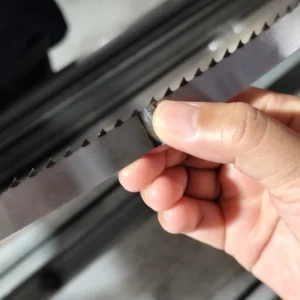
CK67 offers high hardness and good elasticity due to its high carbon content. It is a traditional mainstream grade for woodworking band saw blades. Its low straightness deviation in martensitic Q+T steel strip helps ensure cutting accuracy. 75Ni8 contains about 2% nickel, maintaining excellent toughness even at high hardness, making it suitable for band saw blade backs subjected to higher feed pressure.
Metal cutting saw blades:
Recommended grades: 51CrV4/6150, C75Cr1.
51CrV4 (AISI 6150), as a high-strength quenched and tempered steel, has excellent hardenability and tempering stability. It is suitable as a bimetal band saw blade back, ensuring the cutting edge remains stable under high-load cutting. The chromium addition in C75Cr1 improves wear resistance, making it suitable for abrasive conditions such as stone cutting.
Hand tools and cutting edges:
Recommended grades: CK80, CK95, CK100.
These high-carbon grades can reach HRC 55–60 after Q+T treatment. They are suitable for files, scrapers, precision cutting edges, and razor blades. Related applications also include industrial blades and cutting tools.
4.2 Componentes industriales & OEM
Spring elements:
CK67 and 51CrV4 are widely used in automotive damping springs, engine valve springs, and clutch components. Hardenability variants of 51CrV4 can be selected for different workpiece sizes. Thin-section parts may prioritize surface hardness, while thick-section parts may use high-hardenability grades.
Precision stamped parts:
CK50 and CK55 have moderate carbon content and good plasticity. During stamping, they help maintain dimensional precision without being too soft, which can cause burrs, or too hard, which can cause cracking.
Cuchillas industriales:
CK60 and CK70 combine hardness and toughness after cold rolling and Q+T. They are suitable for industrial scrapers, espátulas, and sole knives that do not require severe bending.
5. Delivery Forms & Personalización
5.1 Delivery Condition Selection Guide
| Condiciones de entrega | Hardness Range | Suitable Applications | Descripción |
|---|---|---|---|
| recocido | ≤19 HRC | Parts requiring subsequent cold forming | Good plasticity, suitable for stamping and bending |
| Spheroidize annealed | ≤17 HRC | Cold heading, deep drawing, large deformation | Spheroidized carbides, optimal formability |
| Cold-rolled | 21–28 HRC | Structural parts used directly | High surface finish, good dimensional accuracy |
| Apagado & templado (Q+T) | 29–55 HRC | High-hardness tool parts used directly | No secondary heat treatment required by customer |
| Custom hardness | Customized on request | Special operating conditions | Target hardness range can be customized by application |
5.2 Customization Dimensions
-
Dimension customization: Thickness 0.08–5.0 mm, width 2–1250 mm, ultra-thin precision strip available
-
Hardness customization: Quenching and tempering parameters adjusted to customer process requirements, with target hardness range provided
-
Edge customization: Rounded edge, borde de hendidura, square edge, and combined forms
-
Surface customization: Pulido, brillante, blued, oiled / unoiled
-
Coil weight customization: Single coil weight adjusted to customer production line requirements
-
Packaging customization: Papel contra la riega + light oil + película de plástico + metal pallet; standard export sea-worthy packaging
6. Estándares & Seguro de calidad
The product follows multiple international standards, including DIN, AISI, ASTM, Licenciatura, ES, ÉL, y. The main standards covered include:
-
German standards: DE 17222 / EN 10132
-
American standards: AISI/SAE (1045–1095, 6150)
-
Japanese standards: JIS G3311 / JIS G4404
-
International standard: YO ASI 9001:2015 Quality Management System
Quality control covers chemical composition analysis, Rockwell/Vickers hardness testing, tensile property analysis, metallographic structure inspection, and dimensional accuracy inspection.
7. Frequently Asked Questions (FAQ)
Q1: What is the core difference between CK series carbon steel and alloy steel strip?
CK series is carbon steel. Different hardness levels are obtained by adjusting carbon content. It is cost-effective and suitable for large-volume tool manufacturing. Alloy steel strip obtains higher hardenability, better toughness, and tempering stability by adding Cr, En, V, and other elements. It is suitable for working conditions requiring higher comprehensive mechanical properties.
Q2: How should I choose between CK67 and CK75?
CK67 has a carbon content of about 0.65%. It is suitable for applications requiring medium hardness and toughness, such as automotive damping springs and standard woodworking band saw blades. CK75 has a carbon content of about 0.75% and can reach HRC 50–55. It offers better wear resistance and is suitable for saw blades and high-hardness tools requiring longer edge durability.
Q3: What advantages does 75Ni8 have over CK75?
75Ni8 contains about 2% nickel, providing better toughness and fatigue resistance at the same carbon content. Under high-load cutting or impact conditions, 75Ni8 band saw blade backs are less likely to break and have a longer service life.
Q4: Do you support customer-specified hardness and dimensions?
Sí. Hardness range (HRC 20–55), espesor (0.08–5.0 mm), and width (2–1250 mm) can be customized. Samples can be provided for confirmation before mass production.
Q5: What applications is 51CrV4 (6150) suitable for?
51CrV4 is a quenched and tempered spring steel. Typical applications include band saw blade backs, automotive suspension springs, resortes de válvula, and high-stress mechanical components.
Q6: What is the minimum order quantity?
Usually 1 ton. Custom specifications can be negotiated.
Q7: Is this product food-grade?
No. Unless a specific food-grade certification is separately agreed and provided, this product is positioned as an industrial steel strip for tools, cuchillas de sierra, industrial components, and OEM applications. It should not be classified as a food-grade material by default.