1. Descripción del producto
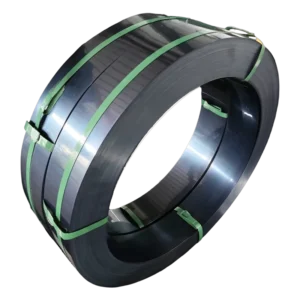
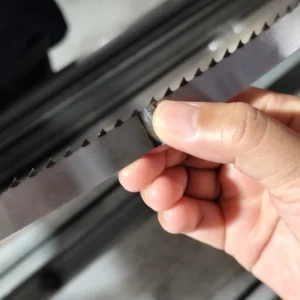
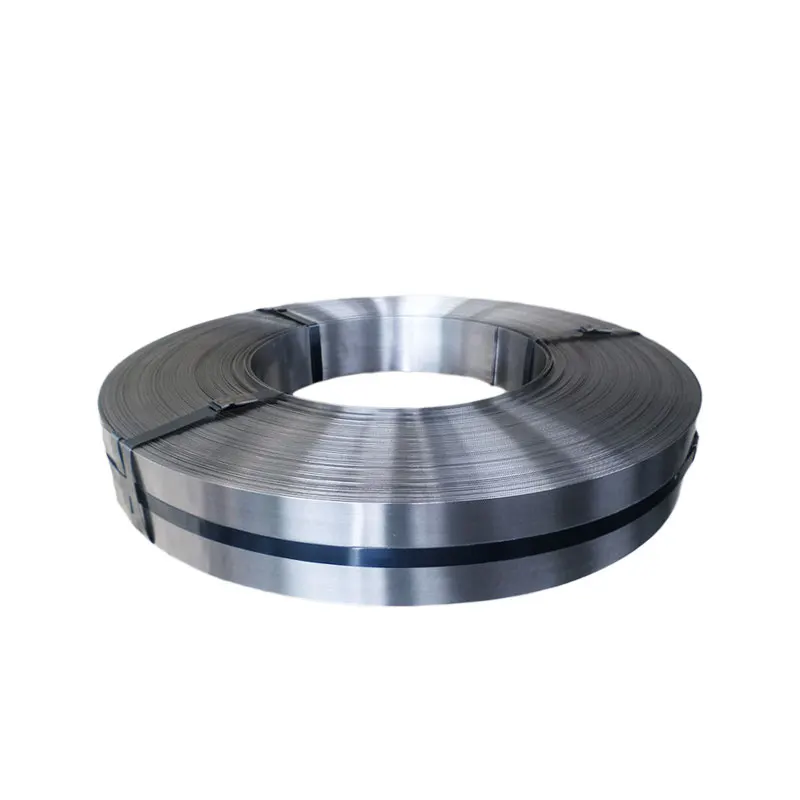
Food cutting tool precision steel strip is a cold-rolled, heat-treated, and precision-finished narrow steel strip designed for manufacturing meat band saw blades, fish slicing knives, and industrial food processing blades. It extends the precision steel strip product chain downstream: the thickness control, flatness accuracy, and material uniformity of cold-rolled precision strip are converted into a base material that food cutting tool manufacturers can directly slit, tooth, set, weld, and heat treat.
Product Chain Diagram
Precision steel strip substrate → Precision steel strip for food cutting tools (this product) → Finished food cutting tools (meat band saw blades / fish slicing knives / industrial food blades)
This product connects two business segments. On the upstream side, it relies on the thickness tolerance capability of precision steel strip lines, which can reach ±0.003 mm. On the downstream side, it is adapted to the specific operating requirements of food cutting tools: resistencia a la corrosión, food-contact compliance, and edge retention.
Typical Applications
-
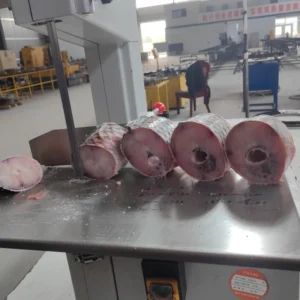
Meat processing: band saw blade base material for slaughterhouses, meat plants, supermarket meat counters, and cutting fresh meat, frozen meat, and bone-in meat
-
Seafood processing: base material for fish slicing and deboning band saw blades
-
Procesamiento de aves: base material for chicken and duck cutting line band saw blades
-
Industrial food blades: bacon slicers, food cutting circular knives, and industrial food processing blades
2. Core Technical Specifications
The following parameters cover mainstream specifications for food cutting tool precision steel strip. Specific technical indicators can be customized according to blade type and cutting conditions.
2.1 Dimensiones
| Parámetro | Standard Range | Customization Capability |
|---|---|---|
| Espesor | 0.1 mm – 3.0 milímetros | Ultra-thin down to 0.05 milímetros |
| Ancho | 5 mm – 380 milímetros | Narrow slitting down to 5 milímetros |
| Coil weight | Max. 5 kg per mm of strip width | Custom coil splitting |
| Supply form | Bobina / cut-to-length straight strips (0.5–4.0 m) | Welded endless band semi-finished products |
Typical industry supply ranges for 13C26 precision strip and similar food-grade strip.
2.2 Thickness Tolerance
| Rango de grosor (milímetros) | T1 (±mm) | T2 (±mm) | T3 (±mm) |
|---|---|---|---|
| 0.020 – 0.040 | 0.004 | 0.003 | 0.002 |
| 0.040 – 0.100 | 0.006 | 0.005 | 0.004 |
| 0.100 – 0.200 | 0.010 | 0.007 | 0.005 |
| 0.200 – 0.400 | 0.015 | 0.011 | 0.008 |
Food cutting tool strip typically uses T2 or T3 accuracy grades to ensure the blade body runs straight and avoids deviation during high-speed operation.
2.3 Propiedades mecánicas
| Condiciones de entrega | Resistencia a la tracción (MPa) | Dureza (alto voltaje) | Dureza (HRB) |
|---|---|---|---|
| recocido | ≤ 700 | ≤ 240 | ≤ 98 |
| Cold-rolled | 700 – 1,100 | 215 – 345 | 94.3 – 108.7 |
| Curtido + templado | Per customer process | — | 44 – 52 HRC typical for band saw blades; higher hardness available for fine-edge industrial blades |
2.4 Flatness and Surface
| Parámetro | Estándar |
|---|---|
| Flatness deviation | ≤ 1 milímetros / 3 m |
| Acabado superficial | Bright polished / white polished |
| Edge condition | Abertura + deburred / round edge |
| Camber | ≤ 0.16″ / 8 ft |
3. Material Selection Guide
The core challenge for food cutting tool precision steel strip is balancing dureza (retención de borde), resistencia a la corrosión (food safety and washdown environments), y tenacidad (fracture resistance). The following material grades and application scenarios provide a selection reference.
3.1 Martensitic Stainless Steel — Preferred Solution
13C26 (modified AISI 420) is the most widely used standard material for food cutting blades. Después del tratamiento térmico, hardness can reach 58–62 HRC, combining good corrosion resistance with excellent wear resistance.
| Parámetro | Valor |
|---|---|
| Composición química | C: 0.68%, cr: 13.0%, Y: 0.4%, Minnesota: 0.7% |
| Quenching temperature | 1,060°C, oil quench |
| Tempered hardness | 55–62 HRC |
| Typical uses | Bacon slicers, industrial food blades, band saw blade base material |
420J1 / SUS420J1 is another common martensitic stainless steel for food processing blades. It offers excellent hardenability and moderate corrosion resistance, with thickness tolerance controllable to ±0.01 mm.
12C27M is specifically developed for kitchenware and food processing tools. It balances wear resistance and corrosion resistance, corresponding to the performance level of the 420/440A series.
3.2 High Carbon Alloy Steel
| Calificación | Typical Hardness | Characteristics and Applications |
|---|---|---|
| C75S / 75Cr1 | 44–52 HRC | High fatigue strength; suitable for high-speed fresh meat cutting |
| SKS51 | 44–52 HRC | Japanese tool steel; excellent edge retention |
| 75Nosotros8 | 44–52 HRC | Nickel alloy steel; good toughness; suitable for bone-in products |
| X32CrMoV3-3 | 48–52 HRC | Mo-V alloy steel; excelente resistencia al desgaste; suitable for high-load continuous cutting |
3.3 Material Selection Decision Reference
| Cutting Object | Recommended Material | Recommended Hardness | Recommended Tooth Pitch |
|---|---|---|---|
| Fresh meat, boneless meat | 13C26 / C75S | 44–48 HRC | 4 TPI |
| Frozen meat, bone-in meat | 75Nosotros8 / X32CrMoV3-3 | 46–52 HRC | 3 TPI |
| Fish, poultry | 13C26 / 12C27M | 44–46 HRC | 4–6 TPI |
| Bacon, industrial food slicing | 13C26 precision ground | 58–62 HRC | Custom |
4. Food Safety Compliance and Quality Certifications
As a component of food-contact materials, food cutting tool precision steel strip must meet the food-contact material regulatory requirements of the target market.
| Proceso de dar un título / Estándar | Applicable Region | Descripción |
|---|---|---|
| YO ASI 9001:2015 | Global | Quality management system |
| FDA 21 CFR 175.300 | United States | Metal food-contact material compliance |
| ES 9684 | Porcelana | National Food Safety Standard — Stainless Steel Products |
| EU 1935/2004 | European Union | Food-contact materials framework regulation |
| Mill Test Certificate | Global | Material certificate supplied with each batch |
Key compliance note: Martensitic stainless steel grades such as 13C26 and 420J1 are widely used in food cutting applications. Batch-specific Mill Test Certificates and food-contact compliance documentation can be provided for target markets.
5. Frequently Asked Questions (FAQ)
Q1: What is the difference between food-grade precision steel strip and standard cold-rolled steel strip?
Food-grade precision steel strip differs in three main dimensions: tighter thickness tolerance (T2/T3 vs. T4/T5), higher flatness precision (≤1 mm/3 m to prevent blade deviation during high-speed cutting), y superior surface finish (bright polished to reduce food residue and bacterial adhesion). Además, food-grade strip can be supplied with food-contact compliance documentation for target markets.
Q2: Which steel grade is recommended for cutting frozen meat?
Frozen meat cutting places the highest demands on tenacidad y resistencia al desgaste. 75Nosotros8 (with 1.80–2.10% nickel) or X32CrMoV3-3 (with molybdenum-vanadium alloy) are recommended. Nickel-containing grades maintain good impact toughness at low temperatures, reducing the risk of blade fracture when cutting hard frozen blocks. Recommended hardness: 46–50 HRC; recommended tooth pitch: 3 TPI for fast cutting.
Q3: Who should perform heat treatment — the strip supplier or the tool manufacturer?
Both models are possible. Some suppliers can deliver curtido + templado banda, which tool manufacturers can directly tooth and use. More commonly, suppliers deliver annealed or cold-rolled banda, and the tool manufacturer performs heat treatment according to its own tooth design and equipment conditions. We recommend that tool manufacturers control heat treatment themselves, because tooth forming and heat treatment must be closely integrated, and different tooth forms require different hardening depth.
Q4: What is the minimum order quantity (Cantidad mínima de pedido) and lead time?
Precision steel strip is usually supplied in coils. Standard MOQ is 500 kg–1 ton per specification. Common material grades such as 13C26, C75S, and 420J1 are stocked with a 2–4 week lead time. Custom alloy configurations require 6–8 weeks. Small-batch trial production orders are supported.
Q5: Is custom width and slitting supported?
Sí. Strip width can be custom slit according to customer blade specifications, with narrow slitting down to 5 milímetros. After slitting, edges can be deburred or round-edged to ensure that the blade does not develop stress concentration due to burrs during high-speed operation. Width tolerance is positive-only, and T2 or B1 grade can be provided.