Industry Overview
The global band saw blade market was valued at approximately $1.42 billion in 2024 and is projected to reach $2.21 billion by 2033, growing at a CAGR of 5.1%-. Within this market, meat and bone cutting represents a significant and growing application segment, driven by expanding demand across slaughterhouses, meat processing plants, butcher shops, supermarkets, and food service operations.
The industrial bone band saw market alone was estimated at $120 million in 2024 and is forecast to reach $200 million by 2033, registering a 6.5% CAGR from 2026 a 2033-. This growth reflects broader trends in protein consumption, the rise of centralized meat processing facilities, and increasing automation in food production.
Modern meat and bone band saw blades have evolved considerably. Today’s blades are engineered with food-grade materials, precision-ground teeth, and advanced heat treatment processes that deliver improved cutting accuracy, velocidad, and safety compared to earlier generations-. The market offers a range of options—from carbon steel and bi-metal to carbide-tipped and variable tooth configurations—each designed for specific cutting applications.
Common Problems
Most meat bandsaw blade failures are not caused by the blade alone. Blade tension, wheel alignment, worn guides, incorrect tooth pitch, machine tracking, and poor maintenance can all reduce blade life and affect cut quality. Understanding the root cause is essential because replacing a blade without fixing the underlying issue simply results in another premature failure.
Crooked or Wandering Cuts
Crooked cutting is one of the most common complaints in butcher shops and processing rooms. A blade that consistently pulls to one side may be caused by worn upper or lower guides, incorrect blade tension, wheel misalignment, uneven tooth set, a dull blade, or incorrect blade width or TPI. En muchos casos, operators assume the blade is defective when the real issue is machine setup.
Premature Blade Breakage
Blade cracking and breakage are usually caused by stress, fatigue, overheating, or machine contact points. Common causes include excessive blade tension, blade rubbing against wheel flanges, worn or damaged guides, poor wheel alignment, fatigue cracking, incorrect blade thickness for the machine, and aggressive cutting of frozen or bone-in product. Small wheel machines are especially sensitive to blade thickness—thicker blades fatigue faster when repeatedly flexed around small wheel diameters.
Blade Tension Issues
Blade tension directly affects both safety and precision. If tension is set too low, the blade can slip off the wheels and whip free at speed. A loose blade can also snag on connective tissue or bones, producing sudden jerks that bring hands dangerously close to the cutting area. Excessive tension is equally problematic—a blade stretched beyond its designed limit can fracture unexpectedly, producing sharp, fast-moving fragments.
Rapid Dulling and Poor Cut Quality
A dull blade manifests through excessive operator feed pressure, rough or uneven cut finishes, and a dark or “cooked” appearance on cut products. Waiting for breakage introduces unnecessary risk, interruption, and potential product loss. After cleaning, blades should be inspected for damaged teeth, cracks near the weld, corrosión, and areas of visible deformation-.
Recommended Products
Several established brands and product lines address the specific demands of meat and bone cutting. Below are notable options across different application categories.
Starrett Meatkutter™ Series
Starrett Meatkutter™ band saw blades feature state-of-the-art tooth geometry and are made with specialty steels, hardened and polished to resist corrosion and contamination. The product line includes several variants:
- Meatkutter™ Premium: Hardened ground teeth with polished high carbon steel, suitable for fresh, frozen, bone-in, and boneless applications. USDA approved for food safety compliance.
- Meatkutter™ Stainless (MKS): Made from stainless steel AISI 420 with rust-proof properties, ideal for facilities with strict cleanliness and sanitation requirements.
- Meatkutter™ Frozen (MKF): Designed for cutting fish down to -4°F (-20°C), with polished high carbon steel and hardened, ground teeth.
- Meatkutter™ Frozen Bi-Metal (MKB): Bi-metal high-speed steel blades that handle frozen fish to temperatures of -76°F (-60°C), offering greater durability than conventional blades.
WINTERSTEIGER LSB Prime Food
The LSB Prime Food band saw blade is a high-performance solution for professional meat and fish processing. It uses food-grade band steel with a hardness of 44–46 HRC, delivering maximum wear resistance and significantly longer service life compared to standard blades. The optimized cutting geometry produces precise, clean cuts on both fresh and frozen products.
DUDRSAW Meat & Fish Series
DUDRSAW offers configurable band saw blades for meat and fish cutting, available in 3 TPI and 4 TPI configurations, as well as variable tooth pitch options. These blades feature a narrow kerf of only 0.16 mm per side, reducing waste and improving yield during deboning. The tooth hardness reaches 62 CDH.
VEVOR Carbon Steel Blades
VEVOR meat saw blades are manufactured from high-strength carbon steel (C75) with seamless welding technology for upgraded hardness and durability. The saw teeth are high-frequency hardened, capable of cutting hard bones and frozen meat with minimal effort. These blades are compatible with common bone sawing machine models.
MESI Industrial Bandsaw Blades
MESI manufactures bandsaw blades using high-quality steel for stable cutting in fresh meat, frozen meat, and bone-in meat. Their range includes 3 TPI blades for heavy-duty applications and 4 TPI for general cutting, with stainless steel options available for maximum hygiene.
Selection Factors
Choosing the right blade requires careful evaluation of several interdependent factors. The table below summarizes the key selection criteria.
| Factor | 3 TPI | 4 TPI |
|---|---|---|
| Mejor para | Large primal cuts, bone-in product, frozen meat | Fresh meat, smaller cuts, retail presentation |
| Cut speed | Fast, aggressive | Moderado |
| Acabado superficial | Rougher, visible tooth marks | Smoother, cleaner |
| Gullet clearance | Larger, clears bone dust efficiently | Smaller, loads up faster |
| Typical applications | Beef/pork breakdown, frozen blocks | Poultry, portion control, trim work |
Dientes por pulgada (TPI)
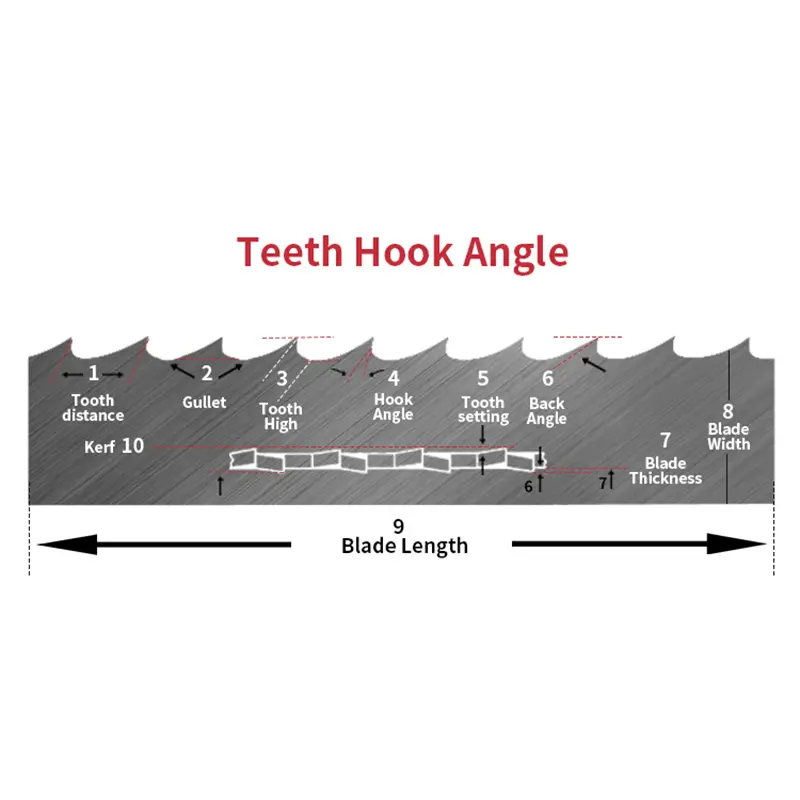
TPI is the single most important specification for matching a blade to the product being cut. A lower TPI means fewer, larger teeth that cut faster and more aggressively. A higher TPI means more, smaller teeth that cut more slowly but produce a smoother, cleaner surface.
- Elegir 3 TPI when cutting large, frozen, or bone-heavy product. The wider tooth spacing allows bone chips and meat debris to clear the cut quickly, reducing heat buildup and extending blade life under heavy use.
- Elegir 4 TPI for smaller, fresh, or appearance-critical cuts. The additional teeth per inch reduce the bite per tooth, which means less tearing, a cleaner cut surface, and better control for precise portions.
Blade Dimensions
Blade length is determined by the specific machine and is not a matter of preference. Blade widths commonly range from 13 mm a 25 milímetros, with 16 mm being the most common for standard butchery bandsaws. Thickness typically ranges from 0.50 mm a 0.65 milímetros. Wider blades provide straighter cuts on large joints or carcasses, while narrower blades are better for intricate work. Thicker blades resist twisting under heavy loads, while thinner blades handle finer cuts without tearing the meat.
Blade Material and Hardness
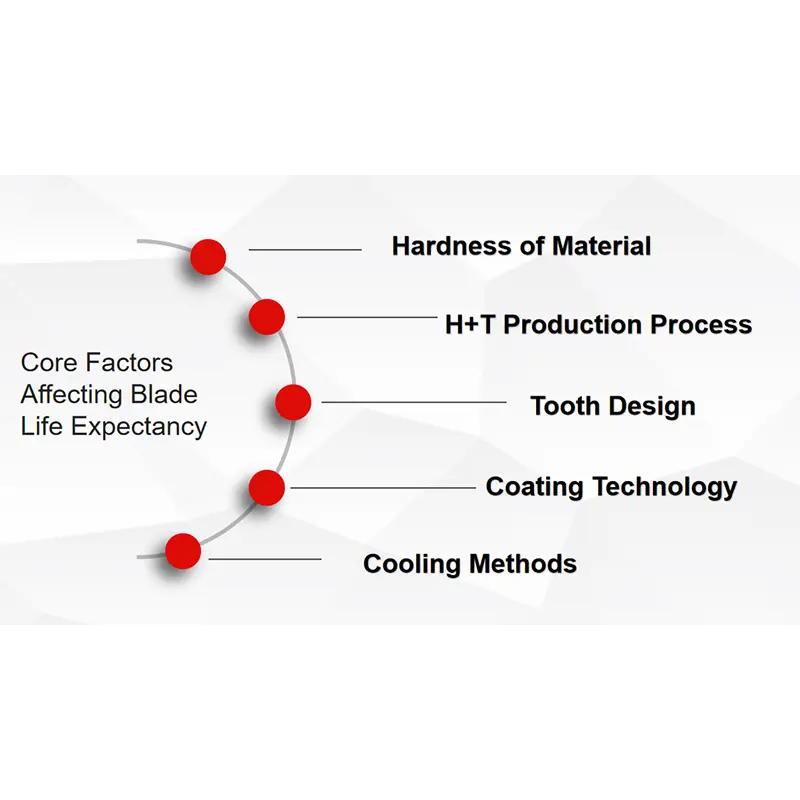
Food-grade band steel with a hardness of 44–46 HRC ensures maximum wear resistance and longer service life. Advanced options reach 45–50 HRC, with tooth tip hardness of 62 HRC in premium products-. The base material should be manufactured from SK5, C75S, or other high-quality alloy steels with specialized heat treatment that delivers tooth rigidity without sacrificing flexibility.
Product Temperature
Product temperature plays a major role in blade performance. A 3 TPI blade will almost always be the best choice for cutting frozen meat, while a 4 TPI blade works well with fresh or chilled meats when bone content is light. Many processors attempt to use 4 TPI on frozen product but switch back to 3 TPI due to slower cutting speeds and increased tooth wear.
Machine Compatibility
Blade thickness must match the machine’s wheel diameter. Small wheel machines are especially sensitive—thicker blades fatigue faster when repeatedly flexed around small wheel diameters. Many compact meat saws use thinner 0.020″ blades to improve flexibility and reduce cracking. The blade must also match the machine’s guide system and tensioning mechanism.
Quality Requirements
Food Safety Compliance
All components that contact food directly must be made of stainless steel or steel with specially treated surfaces. Stainless steel blades, typically AISI 420 or food-grade 304/316L, eliminate the risk of rust, contamination, and metal leaching into food products. These materials are fully compliant with FDA, EU CE, and HACCP food safety regulations. USDA-approved blades are widely available from major manufacturers including Starrett and others.
Hardness and Durability
Blade hardness directly impacts service life and cutting consistency. Food-grade band steel with 44–46 HRC provides a balance of wear resistance and flexibility suitable for most commercial applications. Higher-end options reach 45–50 HRC for extended service intervals. The teeth should be hardened through high-frequency quenching or similar processes to maintain sharpness when cutting bone and frozen products.
Resistencia a la corrosión
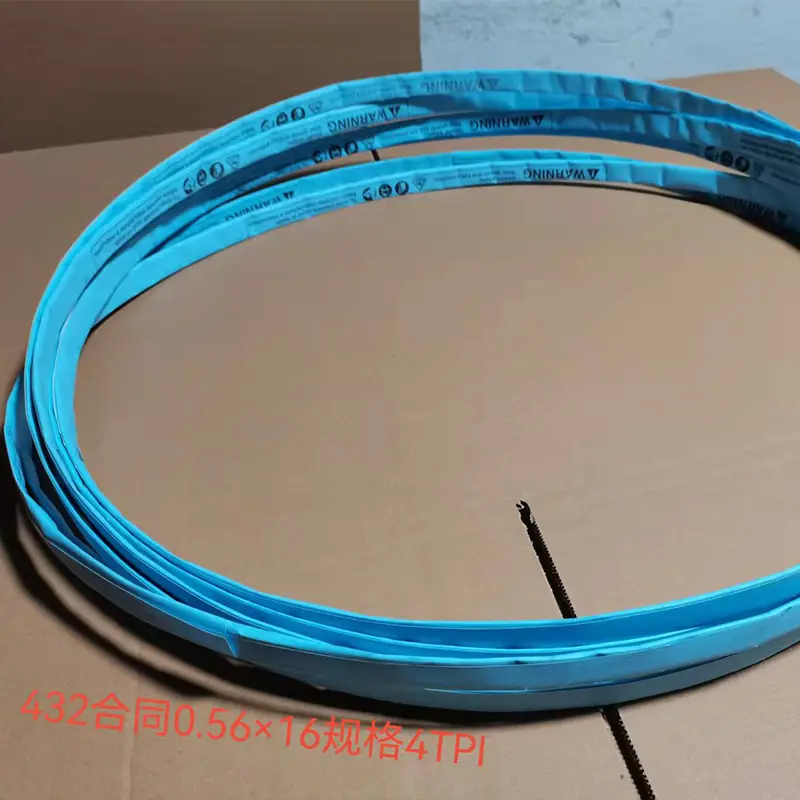
Corrosion resistance is critical for hygiene and blade longevity. Polished high carbon steel blades resist corrosion and contamination, while stainless steel variants offer superior rust-proofing. Proper storage—individually wrapped in rust-proof paper—also prevents corrosion during shelf life.
Weld Quality and Traceability
Seamless welding technology ensures blade integrity and prevents premature failure at the weld joint. Laser-etched identification on quality blades enables traceability, guaranteeing product quality and food safety compliance. Operators should inspect blades after cleaning for damaged teeth, cracks near the weld, corrosión, and areas of visible deformation.
Consistent Tooth Geometry
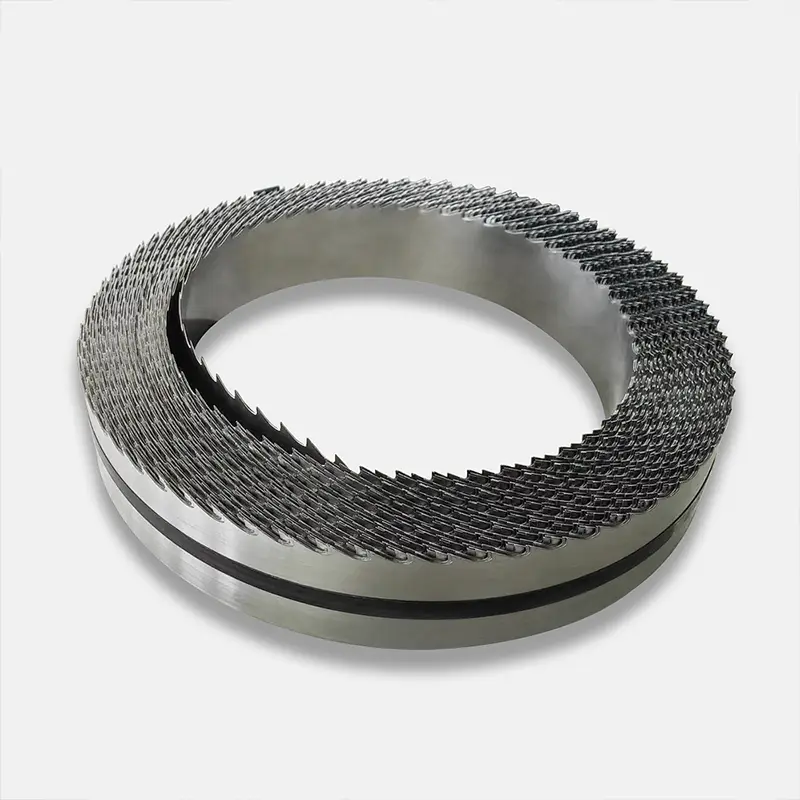
Precision-ground teeth with tightly controlled set tolerances ensure the strength and durability needed for demanding bone-in applications. Consistent tooth geometry reduces vibration, improves cut quality, and extends blade life. Advanced grinding and tooth shaping processes enable blades to cut with less noise, produce flatter cut surfaces, and deliver longer service life.