Industry Overview
Modern meat processing plants, commercial abattoirs and butcher facilities face constant pressure to balance high throughput, product yield, food safety and finished‑cut visual quality. Band saw blades are core consumables for breaking carcasses, cutting bone‑in primals, frozen blocks and portioning fresh meat.
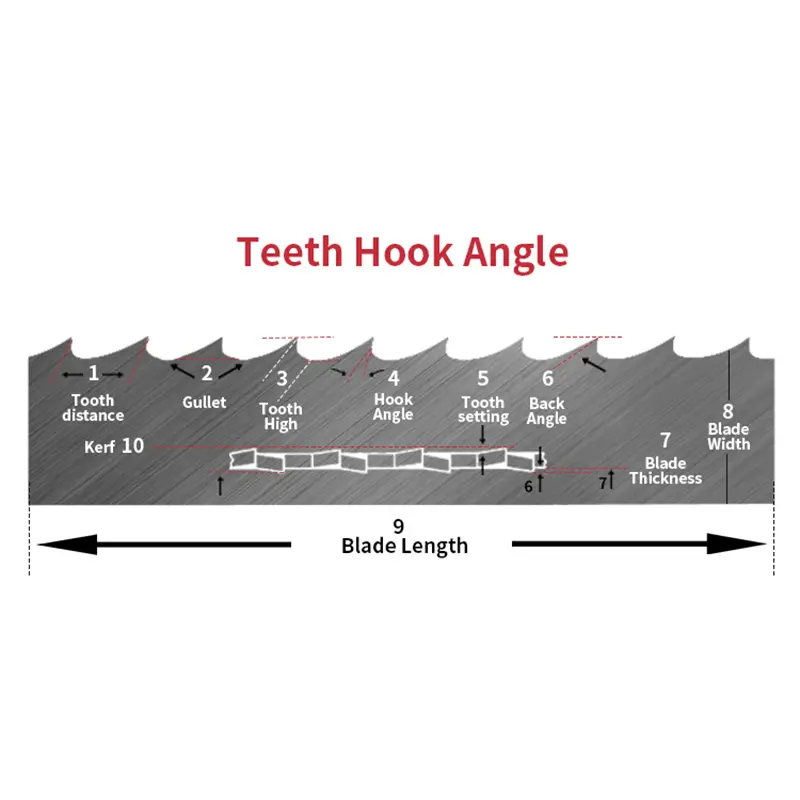
Among all blade geometric parameters, tooth pitch (commonly measured as TPI‑Teeth Per Inch) is one of the most underestimated yet decisive variables for production performance. Tooth pitch defines the spacing between adjacent cutting teeth, directly controlling chip evacuation, bite depth, cutting aggressiveness and surface finish. Wrong pitch selection leads to higher operational cost, more product waste, frequent blade breakage and downgraded finished goods. For meat processors targeting stable output and maximum meat yield, matching tooth pitch to your actual cutting materials is critical for profitable daily operation.
Common Problems
Most meat‑cutting failures originate from mismatched tooth pitch rather than poor blade material alone. Typical field‑observed pain points include:
- Blade clogging & overheating: Too‑fine pitch (high TPI) for bone‑in or frozen material results in insufficient gullet space. Bone dust, fat and meat residues pack between teeth. Heat builds up, accelerating dulling and even blade cracking.
- Ragged cuts & excessive waste: Over‑coarse pitch applied on soft boneless meat tears muscle fibres, creates rough cut edges and increases trim loss, downgrading retail‑ready portions.
- Short service life & unexpected breakage: Fine teeth forced to cut hard thick bone suffer chipped tooth tips. Over‑large teeth on thin products generate heavy vibration, raising blade fatigue risk.
- Fluctuating throughput: Wrong pitch either slows cutting speed dramatically or produces unacceptable surface quality, forcing repeated re‑cuts and lowering overall line capacity.
- Inconsistent finished appearance: Mixed production of frozen, bone‑in and fresh meat using one fixed pitch leads to unstable cut quality across batches.
All above issues push up total cost via higher blade consumption, lower meat yield and extra labour for rework.
Recommended Products
Based on global meat‑processing application cases, we categorise recommended band‑saw blade solutions by tooth‑pitch for mainstream working scenarios:
- 3 TPI (Coarse Pitch) Ideal for heavy‑duty frozen meat, large bone‑in carcass breaking, beef femur, thick pork bone. Large gullets evacuate bone chips and fat efficiently for fast, high‑volume cutting. Best for abattoir primary processing.
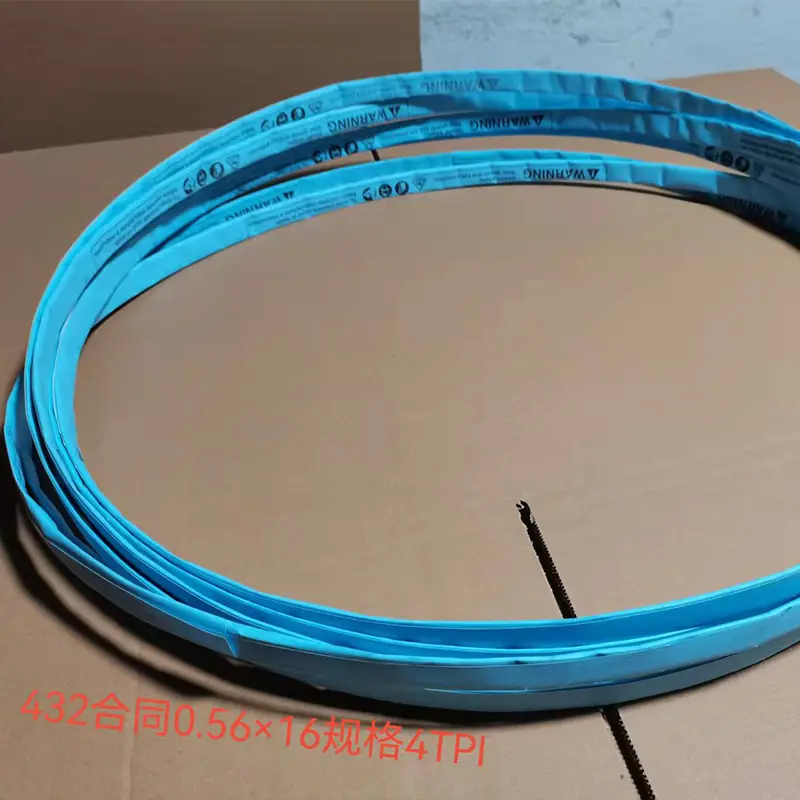
- 4 TPI (General‑Purpose Pitch) Balanced option for mixed fresh bone‑in cuts, lamb, medium‑size pork primals. Delivers decent cutting speed plus cleaner surface finish. Suitable for butcher shops and mid‑size processing facilities with mixed‑material production.
- 5‑6 TPI (Fine‑Medium Pitch) Optimised for fresh meat with small bones, poultry portions, boneless frozen blocks. Produces smooth cut surfaces, minimises bone fragments in finished products. Perfect for retail‑grade portion cutting where visual quality matters.
Nota: All above blades adopt food‑grade stainless alloy substrate, precision tooth setting and stress‑relieved body, complying with food‑processing hygiene standards. Custom tooth‑pitch, blade width, thickness and length available for non‑standard band‑saw equipment.
Selection Factors
When deciding tooth pitch for your production line, evaluate these key practical factors before ordering blades:
- Material characteristics:
- Frozen / hard bone‑in meat: select lower TPI (wider pitch) for large chip space.
- Soft boneless / small‑bone fresh meat: choose higher TPI (narrower pitch) for smooth slicing.
- Core production goal: Prioritise throughput → lean toward coarser pitch; Prioritise cut surface & retail presentation → lean toward finer pitch.
- Machine parameters: Match pitch with band‑saw power, running speed and blade width. High‑speed heavy‑duty machines normally work better with 3‑4 TPI.
- Mixed‑material workflow: If you process multiple types of meat/bone, prepare two sets of blades for change‑over instead of using one compromise pitch for everything.
- Sanitation requirement: Larger gullets of coarse‑pitch blades demand more thorough cleaning to remove trapped fat residues during CIP or manual sanitation cycles.
Quality Requirements
Qualified meat‑processing band‑saw blades must satisfy both mechanical performance and food‑contact safety requirements:
- Tooth‑pitch precision: Uniform tooth spacing across full blade length. Irregular pitch causes vibration, wandering cuts and uneven tooth wear.
- Food‑grade base material: Corrosion‑resistant stainless steel alloy, suitable for repeated wet‑environment sanitation; no harmful coating that may flake into meat products.
- Consistent tooth set & dureza: Even tooth offset and controlled tooth hardness balance cutting sharpness and chipping resistance when hitting hard bone.
- Stress‑relieved blade body: Reduces fatigue cracking under continuous dynamic sawing in cold‑wet workshop conditions.
- Traceability & compliance: Batch traceability, material certification supporting food‑processing industry audits.
Low‑cost blades with loose pitch tolerance may look competitive on unit price, yet they generate far higher hidden costs from yield loss and frequent replacement.Request a Quote